
Shrubs
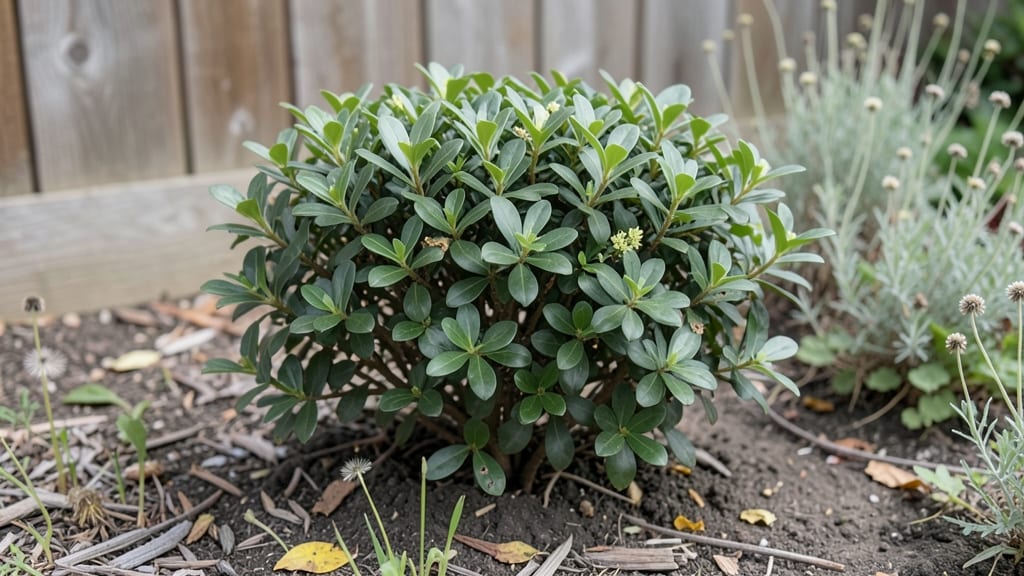
Mastering evergreen shrub identification transforms your garden from a puzzle into a polished, evergreen-lined masterpiece—here’s how to spot the difference between boxwoods and hollies in seconds. foolproof. The right shrub in the right spot means fewer dead zones in winter and a foundation that thrives through every season.
Start with leaf shape: boxwoods have oval, glossy leaves that feel like leather, while rhododendrons sport leathery, elliptical leaves with visible veins. Bark matters too—smooth and gray on boxwoods, but peeling or scaly on some hollies.
A simple magnifying glass or phone app like PictureThis can reveal these details in seconds, saving you from costly planting mistakes.
Once you recognize the traits, care becomes intuitive. Boxwoods handle shearing like a pro, while rhododendrons need acidic soil and shade. Proper ID means you’ll prune at the right time, fertilize correctly, and avoid overwatering sensitive species. Your shrubs will stay healthy, vibrant, and drought-resistant for decades.
This works for any climate—just adjust for local evergreens like arborvitae or pieris. Grab a notebook, snap a few photos, and soon you’ll spot the differences without second-guessing. Let’s get those shrubs identified!
What Triggers Misidentification
Identifying evergreen shrubs can feel like solving a puzzle—especially when similar species share overlapping traits. But why do even experienced gardeners mix up one type for another? The answer lies in a mix of biological quirks, environmental factors, and human perception.
Let’s break down the key reasons misidentifications happen, so you can sharpen your eye for the details that matter.
🌿 1. Overlapping Physical Traits
Evergreen shrubs often share striking similarities in leaf shape, bark texture, or growth habit, making them easy to confuse at first glance. For example:
- Needle vs. Scale Leaves: Some shrubs, like Juniperus (juniper) and Thuja (arborvitae), have tiny, scale-like leaves, while others, such as Pinus (pine), sport long needles. However, Chamaecyparis (false cypress) can blur the line with its flattened, scale-like foliage that resembles both.
- Bark Resemblance: The peeling, cinnamon-brown bark of Betula (birch) might remind you of Magnolia grandiflora’s rough texture, but these are deciduous vs. evergreen—a critical distinction. Even evergreens like Pittosporum and Ilex (holly) can have bark that’s nearly identical.
- Growth Habit Confusion: Upright shrubs like Podocarpus (podocarpus) can mimic the shape of trees, while sprawling types like Lonicera (some honeysuckles) might be mistaken for vines or ground covers.
Actionable Tip: 🔍 Examine the fine details—leaf arrangement (alternate vs. opposite), vein patterns, and even the underside of leaves can reveal hidden clues.
🌱 2. Seasonal and Environmental Variations
Evergreens aren’t static—they change subtly with seasons, soil, and climate. What you see in summer might not match a reference photo from winter or a different region.
- Winter Dormancy: Some evergreens, like Rhododendron or Pieris, shed older leaves in late winter, creating a "semi-evergreen" look. This can lead gardeners to assume they’re dealing with a deciduous shrub.
- Stress-Induced Changes: Drought, poor soil, or extreme heat can cause leaves to yellow, curl, or drop, mimicking disease or a different species. For example, Arbutus unedo (strawberry tree) may look unhealthy in dry conditions but is naturally evergreen.
- Regional Adaptations: A Chamaecyparis lawsoniana in the Pacific Northwest might grow taller and more conical than its counterpart in the Southeast, where it’s often shorter and bushier.
Actionable Tip: 📅 Compare photos across seasons and regions—use apps like iNaturalist or PlantNet to cross-reference real-world examples.
🌡️ 3. Human Bias and Overgeneralization
Our brains love patterns—and sometimes, they fill in the gaps with assumptions. Common pitfalls include:
- Assuming "Evergreen = Pine": Many people default to thinking of Pinus species when they see needle-like leaves, ignoring broadleaf evergreens like Ilex or Prunus laurocerasus (cherry laurel).
- Ignoring Flower/Fruit Clues: Evergreens often have inconspicuous flowers or berries that are key identifiers. For instance, Viburnum tinus (laurustinus) has pink spring flowers and red berries, while Mahonia aquifolium produces yellow flowers and blue berries—details that set them apart.
- Relying on Common Names: A shrub called "boxwood" might actually be Buxus or Pachysandra, both evergreen but with completely different leaf structures.
Actionable Tip: 📝 Create a cheat sheet with 3-5 non-negotiable traits (e.g., leaf shape, flower color, bark texture) for your top 10 suspect shrubs to avoid shortcuts.
🌍 4. Hybridization and Cultivar Confusion
Many evergreen shrubs are hybrids or cultivars bred for specific traits, leading to unpredictable variations in the wild or nursery. For example:
- Cultivar Mix-Ups: Juniperus × pfitzeriana (Pfitzer juniper) comes in dozens of cultivars with different growth habits (spreading vs. upright). A "Blue Rug" juniper won’t look like a "Blue Star."
- Natural Hybrids: × Cupressocyparis leylandii (Leyland cypress) is a hybrid of two Cupressus and × Nootka cypress species, making it distinct from either parent. Its scale-like leaves and rapid growth set it apart.
- Nursery Labeling Errors: Mislabeling is rampant—what’s sold as Abies (fir) might actually be Pseudotsuga (Douglas fir), which has conical bracts on its cones.
Actionable Tip: 🌱 When in doubt, check the tags or ask for the botanical name—not just the common name. If unsure, snap a photo of leaves, bark, and flowers for verification.
💡 Pro Tip: Use a process of elimination—start with the most distinctive traits (e.g., "Does it have needles or broad leaves?") and narrow down from there. The more you practice, the easier it becomes to spot the subtle differences that separate one evergreen from another!
Quick Fixes for Shrub ID Struggles
Identifying evergreen shrubs can feel like solving a puzzle when you’re staring at a dense thicket of glossy leaves and mysterious branches. But with the right approach, you can turn confusion into confidence—fast! Below are practical, step-by-step solutions tailored to common challenges, from leafy look-alikes to seasonal surprises.
If your shrubs all seem to blend into one green wall, focus on these three key differentiators to break the tie:
1.
Leaf Shape & Arrangement: The Hidden Clues - Needles vs. Flat Leaves: Pine-like needles (e.g., Juniperus) vs. broad, flat leaves (e.g., Holly or Boxwood). - Edge Details: Saw-toothed (Rhododendron), smooth (Camellia), or rolled (Arbutus). - Stem Twists: Alternate (one leaf per node) or opposite (pairs at each node) arrangements.
💡 Pro Tip: Snap a leaf and examine the underside—some shrubs (like Pieris) have rust-colored hairs, while others (like Ilex) are sleek and waxy.
2. Bark & Branch Patterns: The Aging Secret
- Peeling Bark: Magnolia (papery layers) vs. Cherry Laurel (smooth, reddish).
- Thorns: Pyracantha (sharp, clustered) vs. Hawthorn (stubby, scattered).
- Branch Angles: Azalea branches grow upward; Andromeda sprawls horizontally.
✨ Quick Test: Rub your fingers along the bark—rough textures (e.g., Leucothoe) often hint at drought tolerance.
3. Flowers & Berries: Seasonal Giveaways
- Spring Blooms: Rhododendron (trumpet-shaped) vs. Camellia (rosy, layered).
- Fruit Color: Red (Pyracantha), black (Holly), or orange (Euonymus).
- Timing: Abelia blooms summer-fall; Pieris flowers in winter-spring.
📊 Memory Trick: Note the first and last months of blooms—this narrows options by 50%.
Evergreens aren’t always green! Yellowing, browning, or shedding can signal health issues—or just nature’s cycle.
🍂 Brown Tips?
Check These First | Cause | Fix | Prevention | |-------------------------|------------------------------------------|-----------------------------------------| | Winter Burn | Trim dead tips in early spring; mulch. | Water deeply before frost; avoid late-season fertilization. | | Overwatering | Let soil dry between waterings; improve drainage. | Use well-draining soil; raised beds help. | | Pests (Spider Mites)| Spray with neem oil; hose off leaves. | Introduce ladybugs; avoid broad-spectrum pesticides. | | Fungal Spot | Prune infected branches; fungicide spray. | Space shrubs for airflow; water at soil level. |
🔥 Hot Fix: If browning is only on one side, it’s likely sun scorch—move the shrub or add shade cloth.
🌡️ Needle Drop? Don’t Panic
- Healthy Drop: Pine or Juniper may shed old needles in spring—no action needed.
- Unhealthy Drop: Sudden yellowing + needles falling? Test for nutrient deficiency (e.g., iron chlorosis).
- Fix: Apply chelated iron; amend soil with compost.
🎯 Golden Rule: If 50%+ of needles are gone, the shrub is stressed—reassess water, soil, and sunlight.
Stuck?
Leverage these no-expertise tools: - Plant ID Apps: Upload a photo to PictureThis or Google Lens for instant matches. - Leaf Rubbings: Fold a leaf over paper; rub with a pencil to reveal vein patterns (unique to species). - Branch Cross-Section: Cut a small stem—vascular patterns (e.g., Boxwood vs. Yew) are diagnostic.
💡 Bonus: Keep a photo journal of your shrubs labeled by season—future you will thank present you!
Remember: The best identifier? Time. Observe your shrubs across all four seasons—their quirks will reveal themselves. Now grab your pruners and start sleuthing!
Frequently asked questions
How can I quickly tell the difference between boxwood and holly?
Boxwood has small, oval leaves with smooth edges and a leathery texture, while holly typically features spiny-toothed leaves and often produces red berries. Check for thorns—holly has them, boxwood doesn’t.
What's the best tool for identifying evergreen shrubs on the go?
Use a plant identification app like PictureThis or Google Lens—just snap a photo of leaves, bark, and flowers for instant matches. For deeper analysis, carry a hand lens (10x magnification) to examine leaf details up close.
Why do some evergreen shrubs lose leaves in winter?
Certain evergreens like rhododendron or pieris naturally shed older leaves in late winter to conserve energy. This is normal—don’t confuse it with disease. True evergreens (like boxwood) retain leaves year-round.
Can I use leaf color alone to identify evergreen shrubs?
No—leaf color varies by season and health. Focus instead on shape, texture, and arrangement. For example, arborvitae has flat, scale-like leaves, while cherry laurel has smooth, elliptical leaves with visible veins.
How do I know if my evergreen shrub is healthy?
Healthy shrubs have vibrant green leaves, no excessive browning, and firm stems. Yellowing leaves may signal iron deficiency, while drooping could mean overwatering. Prune dead branches in early spring for best results.