
Shrubs
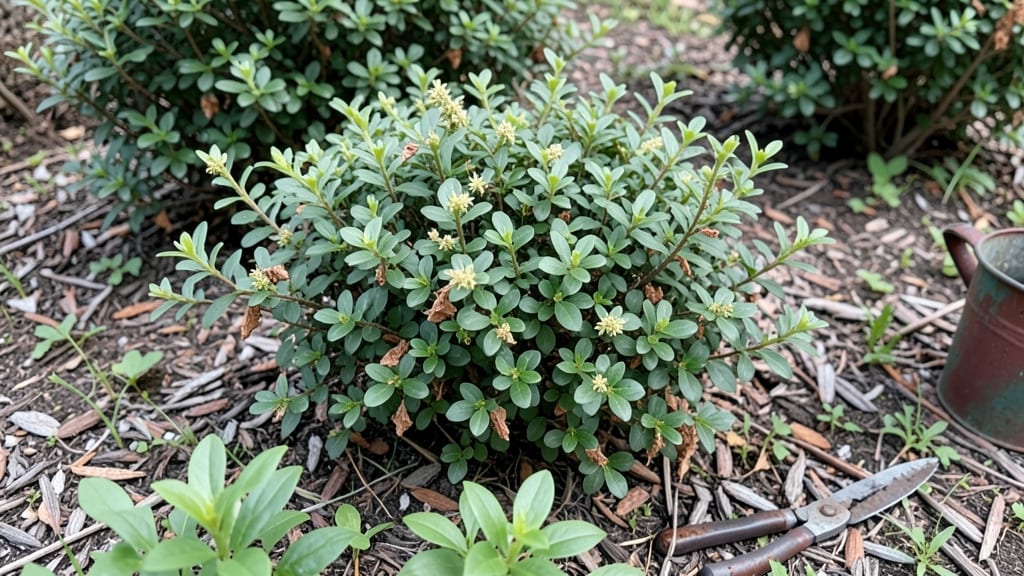
Evergreen shrubs turning brown at the tips usually means they’re thirsty—or drowning. I’ve nursed back more than a few sad-looking boxwoods and junipers by fixing just one thing: their water routine. The key is matching how much they drink to your climate, not the calendar.
Overwatering is the silent killer—those soggy roots can’t breathe, so the edges turn crispy. But underwatering causes the same damage, just slower. Stick your finger in the soil: if it’s dry 2 inches down, it’s time to water deeply.
Most evergreens hate soggy feet but won’t tell you they’re thirsty until it’s too late.
Once you’ve got the watering right, prune out the brown bits with clean shears. Don’t worry—new growth will fill in faster than you think. Within a few weeks, your shrubs should bounce back with fresh green needles, and you’ll have a foolproof system for keeping them lush all year.
This works for boxwoods, junipers, and even azaleas—just adjust how often you water based on your soil type. The secret? Pay attention to what your plants actually need, not what the rulebook says.
Root Causes Of Discoloration
Understanding why your evergreen shrubs are turning brown starts with identifying the hidden triggers lurking beneath the surface—or sometimes, right in plain sight. These plants rely on precise conditions to stay lush and vibrant, and even small disruptions can send them into distress.
Let’s break down the science behind the most common culprits, so you can diagnose the problem like a pro.
Evergreens are tough, but they’re not built for sudden temperature swings. When freezing winter winds or scorching summer heat push them beyond their comfort zone, their cells suffer oxidative damage—a fancy term for when water inside the leaves freezes or evaporates too quickly.
This causes desiccation (drying out) or cold injury, turning needles or leaves brown in patches or uniformly.
- Winter Burn: Cold, dry winds in winter increase transpiration (water loss) faster than roots can replace it. The shrub’s protective cuticle (a waxy layer) cracks, and cells dehydrate. - Heat Stress: High temperatures disrupt photosynthesis, leading to chlorophyll breakdown.
Without enough energy, leaves turn brown and crispy, especially on sun-exposed sides. - Frost Damage: If temperatures drop below 20°F (-7°C) for prolonged periods, cell membranes rupture, and ice crystals form inside tissues, killing them instantly.
Pro Tip: 💡 Mulch heavily in winter (3–4 inches of organic mulch) to insulate roots, and water deeply before the first hard freeze to hydrate plants fully. In summer, provide afternoon shade for heat-sensitive varieties like boxwoods or juniper.
Evergreens hate wet feet. Unlike deciduous shrubs, they’re adapted to well-drained soils, and excess moisture creates a perfect storm for root rot (caused by fungi like Phytophthora) and anaerobic stress (when roots suffocate without oxygen).
Brown, mushy foliage or stems are classic signs of root decay, while yellowing followed by browning indicates nutrient uptake failure.
- Compacted or Clay Soil: Water pools around roots, starving them of oxygen. Soil pH also drops in waterlogged conditions, making nutrients like iron and manganese unavailable.
- Overhead Watering: Wet foliage encourages foliar diseases (e.g., Botrytis or Septoria), which clog stomata (leaf pores) and block gas exchange, leading to browning.
- Fungal Infections: Pathogens like Armillaria (honey fungus) or Phytophthora cinnamomi thrive in soggy soil, girdling roots and cutting off water/nutrient flow.
Pro Tip: ✨ Test your soil’s drainage by digging a 12-inch hole—if water doesn’t drain within 4 hours, amend with sand, perlite, or compost to improve aeration. Water at the base (not overhead) and ensure pots have drainage holes.
Too much sun can be just as harmful as too little. Sun scorch occurs when intense UV radiation overwhelms a shrub’s protective pigments, leading to photooxidative stress. This causes chlorophyll degradation and cell membrane damage, turning leaves brown and brittle—often on the south or west-facing sides.
- Transplant Shock: Recently planted shrubs lack root depth to absorb enough water, so their leaves wilts and burns under direct sun.
- Sudden Light Changes: Moving a shade-loving shrub (like pieris) into full sun triggers rapid chlorophyll loss, as the plant can’t adjust quickly enough.
- Reflective Surfaces: Light-colored walls, driveways, or gravel amplify UV rays, acting like a magnifying glass and frying foliage.
Pro Tip: 🌡️ Acclimate shrubs gradually to full sun by dappling light for 2–3 weeks. Use lightweight shade cloth (30%) in peak summer if needed, and water deeply in the morning to reduce evaporation.
Not all brown foliage is environmental—sometimes, tiny invaders are to blame. Insects and diseases feed on sap, block nutrient flow, or inject toxins, causing browning in distinct patterns. Here’s how to spot them:
| Culprit | Symptoms | Science Behind It |
|---|---|---|
| Spider Mites | Stippled, dusty brown leaves | These sap-sucking arachnids inject saliva that disrupts cell function, causing chlorophyll loss. |
| Scale Insects | Sticky residue + brown, curled leaves | They excrete honeydew, fostering sooty mold (a black fungus) that blocks light absorption. |
| Bagworms | Brown silk bags on branches | Larvae defoliate shrubs, and their frass (droppings) clogs stomata, suffocating leaves. |
| Root Weevils | Brown, wilted foliage (even with water) | Adults chew roots, while larvae feed on root tips, starving the plant of water. |
| Fungal Leaf Spots | Brown spots with yellow halos | Pathogens like Alternaria infect through wounds, releasing toxins that kill tissue. |
Pro Tip: 🔥 Blast pests off with water (for mites) or apply horticultural oil in dormant season to smother eggs. Prune and dispose of infested branches immediately to prevent spread.
Evergreens are nutrient hoarders, and when their micronutrient balance tips, browning follows. The most critical culprits:
- Iron (Fe) Deficiency: Causes interveinal chlorosis (yellowing between veins) that progresses to brown, crispy edges—common in alkaline soils (pH > 7.0), where iron becomes unavailable.
- Manganese (Mn) or Zinc (Zn) Shortages: Lead to brown, dead spots on younger leaves (since these nutrients are mobile in the plant).
- Excess Salt or Fertilizer Burn: Over-fertilizing (especially with synthetic nitrogen) burns root tips, halting water uptake. Brown leaf tips or margins are classic signs.
- Boron Toxicity: Too much boron (from well water or overuse of borax) causes brown, curled leaves and stunted growth.
Pro Tip: 💪 Test soil pH—aim for 5.5–6.5 for most evergreens. Use chelated iron for deficiency, and flush soil with water if salt buildup is suspected. Slow-release organic fertilizers (like fish emulsion) prevent burn.
Reviving Your Shrubs Step by Step
When your evergreen shrubs start turning brown, it’s time to roll up your sleeves and take action! The good news? Most issues are fixable with the right approach.
Below, we’ve mapped out practical, science-backed solutions tailored to the most common causes—plus prevention tips to keep your shrubs lush and green year-round.
Signs: Yellowing leaves, brown edges, soggy soil, or mushrooms at the base. Why it happens: Too much water suffocates roots, cutting off oxygen and inviting fungal diseases.
💧 Step-by-Step Fix:
- 🚰 Stop Watering Immediately
- Let the soil dry out completely before watering again. Stick your finger 2 inches into the soil—if it’s damp, wait.
- 🏗️ Improve Drainage
- Amend the soil with perlite, sand, or compost (50/50 mix) to loosen compacted areas.
- If planted in a container, ensure it has drainage holes and elevate it slightly.
- 🌱 Repot or Replant (If Needed)
- If roots are rotting, trim away mushy sections with sterilized pruners and replant in fresh, well-draining soil.
- Add a 1-inch layer of gravel at the bottom of the pot for extra drainage.
- 🍄 Treat Fungal Issues
- Sprinkle fungicide (copper-based or neem oil) on the soil and foliage. Repeat weekly until new growth appears.
💡 Prevention Tips:
✔ Water deeply but infrequently—once a week (or less) in most climates. ✔ Mulch properly—use 3 inches of organic mulch (like bark or pine straw) to regulate moisture. ✔ Choose the right pot—terracotta or fabric pots dry out faster than plastic.
Signs: Crispy, brown leaf edges, desiccated needles, or blackened tips. Why it happens: Evergreens stay green year-round, but extreme cold or winter sunburn (aka "winter scorch") can damage cells.
❄️ Step-by-Step Fix:
- 🪴 Prune Damaged Foliage
- Use clean, sharp shears to trim only the brown, dead parts—never healthy green growth.
- Avoid heavy pruning; remove no more than 1/3 of the plant at once.
- 🛡️ Shield from Wind & Sun
- Windbreaks (like burlap fences or evergreen windbreaks) reduce drying winds.
- Anti-desiccant sprays (wax-based or silicone) create a protective barrier on leaves.
- 🌱 Feed for Recovery
- Apply a balanced fertilizer (10-10-10) in early spring to encourage new growth.
- Avoid high-nitrogen fertilizers—they can stress cold-damaged plants.
💡 Prevention Tips:
✔ Water before winter—deep watering in fall helps roots withstand cold. ✔ Choose cold-hardy varieties—e.g., Inkberry, Boxwood, or Dwarf Alberta Spruce for harsh climates. ✔ Mulch heavily—4-6 inches of mulch insulates roots from freezing temps.
Signs: Bleached, papery brown patches (common on new growth or thin-leafed varieties). Why it happens: Intense afternoon sun + dry soil = leaf scorch.
🔥 Step-by-Step Fix:
- 🌿 Provide Afternoon Shade
- Use lightweight shade cloth (30-50%) or move potted shrubs to a dappled shade spot.
- Temporary fix: Drape a white sheet over the plant during peak sun (12–4 PM).
- 💦 Increase Humidity
- Mist leaves daily (early morning) or use a hose-end spray nozzle for a light misting.
- Group plants together to create a microclimate with higher humidity.
- 🌱 Adjust Watering
- Water deeply in the morning (1–2 inches per week) to keep roots cool.
- Avoid wetting leaves at night to prevent fungal growth.
💡 Prevention Tips:
✔ Acclimate gradually—move potted shrubs to sunnier spots over 2 weeks. ✔ Use reflective mulch—light-colored gravel or white plastic mulch reduces heat absorption. ✔ Choose heat-tolerant species—e.g., Dwarf Yaupon Holly or Lantana for hot climates.
Signs: Holes in leaves, sticky residue, wilting, or black/brown spots with yellow halos. Why it happens: Spider mites, scale insects, or root rot (from overwatering) can turn leaves brown.
🐜 Step-by-Step Fix:
- 🔍 Identify the Culprit
- Spider mites? Look for tiny webs on undersides of leaves.
- Scale insects? Check for brown bumps that don’t wipe off.
- Fungal disease? See powdery mildew (white) or rust (orange spots)?
- 🚿 Blast Off Pests
- Hose down leaves with water to dislodge mites/spider webs.
- Neem oil spray (1 tsp per quart of water) kills soft-bodied pests—reapply every 5–7 days.
- 🌿 Treat Disease
- Fungicide (copper or sulfur-based) for powdery mildew/rust.
- Remove infected leaves and sterilize pruners with rubbing alcohol.
- 🌱 Boost Plant Health
- Fertilize with compost tea to strengthen natural defenses.
- Avoid overhead watering to prevent spore spread.
💡 Prevention Tips:
✔ Inspect new plants before bringing them home—quarantine for 2 weeks. ✔ Encourage beneficial insects—ladybugs and lacewings eat pests naturally. ✔ Space plants properly—good airflow reduces humidity-driven diseases.
Not all brown is bad! Some evergreens (like Pine or Juniper) naturally shed older needles—this is normal. If: ✅ New growth is green ✅ Only older needles are brown ✅ Plant looks healthy overall …don’t panic! Just prune lightly to tidy up.
Before jumping into fixes, observe for 2–3 weeks:
- Improving? Brown edges may fade as the plant adjusts.
- Worsening? Act fast—root rot or pests need immediate attention.
With these targeted fixes, your evergreens should bounce back—brown leaves be gone! 🌿✨
Frequently asked questions about evergreen shrubs turning brown
Why do evergreen shrubs turn brown in winter?
Cold winter winds increase water loss faster than roots can replace it, causing desiccation or winter burn. The protective waxy layer on leaves cracks, and cells dehydrate. Mulch heavily (3-4 inches) and water before the first freeze to prevent this.
Can overwatering cause brown leaves on evergreens?
Yes! Evergreens hate soggy soil, which suffocates roots and invites root rot. Check soil moisture by sticking your finger 2 inches deep—if damp, wait to water. Improve drainage with perlite or sand and ensure containers have drainage holes.
How do I tell if brown leaves are from pests or disease?
Pests like scale insects leave sticky residue, while spider mites create fine webs. Fungal diseases often show as brown spots with yellow halos. Inspect leaves closely and treat with neem oil or fungicide if needed.
Will pruning help brown evergreen shrubs recover?
Yes, but only prune dead or damaged branches—never healthy green growth. Use clean, sharp shears and avoid removing more than 1/3 of the plant at once. New growth will fill in within weeks if the root system is healthy.
Are there evergreen varieties that resist browning?
Cold-hardy varieties like Inkberry Holly or Dwarf Alberta Spruce handle winter better, while Dwarf Yaupon Holly tolerates heat. Choose species matched to your climate and soil conditions for fewer issues.