
Shrubs
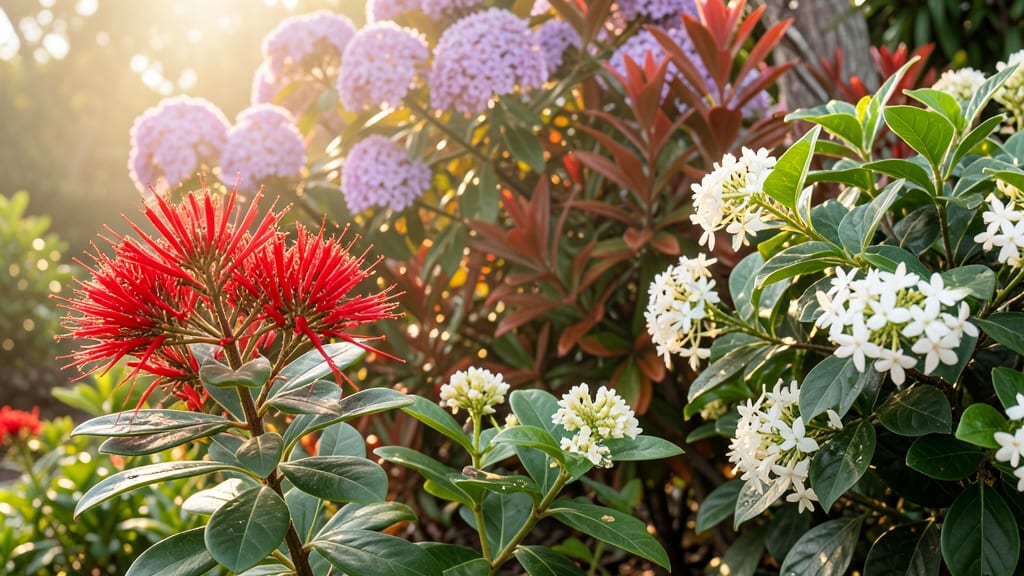
Florida’s subtropical heat demands year-round flowering shrubs that thrive without fuss—like firebush or gardenia—because they bloom through every season with minimal effort. 🌺 I’ve planted these in my Central Florida yard, and the key to their success lies in understanding their natural rhythms, not fighting them.
The right pruning timing, for example, can turn a leggy mess into a fragrant, bushy powerhouse that attracts hummingbirds year-round.
Most Florida-friendly shrubs love morning sun and afternoon shade, well-draining soil, and only need watering when the top inch feels dry. Firebush thrives in poor soil, while gardenias demand slightly acidic conditions—both handle Florida’s humidity better than most.
The secret weapon? Pruning right after blooming (for spring flowers) or before new growth (for summer blooms) keeps them compact and encourages nonstop color.
You’ll end up with a yard that smells like a tropical paradise, even in August. The gardenia’s intoxicating fragrance wafts through evenings, while firebush’s bright red blooms feed hummingbirds through winter.
These shrubs also resist Florida’s most common pests—like scale or whitefly—when planted in the right spot and given proper airflow.
Whether you’re filling a sunny border or replacing an overgrown mess, these native and adapted shrubs work in any Florida landscape. Start with one or two to test your site’s conditions, then expand. The payoff? A low-maintenance, always-blooming garden that outshines anything from a big-box store.
📚 In This Guide
- What you need
- Instructions
- Tips and common mistakes
- Wrapping up and next steps
What you need
- ● Florida-native or heat-tolerant flowering shrubs: 3–5 mature shrubs (e.g., Gardenia jasminoides, Murraya paniculata, or Hamelia patens)
- ● Size: 1–3 gallons (for established plants) or bare-root seedlings (for DIY growers)
- ● Soil amendments: 5 lbs of organic compost (for each planting hole)
- ● 2 lbs of slow-release fertilizer (10-10-10 or 8-3-9 blend, Florida-friendly)
- ● Planting tools: 1 shovel or spade (for digging holes)
- ● 1 garden trowel (for delicate root adjustments)
- ● 1 pruning shears (sterilized, for trimming roots or shaping)
- ● Mulch: 3–4 inches of pine bark or cypress mulch (to retain moisture and suppress weeds)
- ● Watering supplies: 1 hose with adjustable nozzle or watering can
- ○ Optional: drip irrigation kit (for long-term care)
- ● Safety gear: 1 pair of gardening gloves (to protect from thorns or soil-borne pathogens)
- ● 1 sun hat and sunscreen (Florida sun is no joke!)
- ● Soil test kit (to check pH and nutrient levels—ideal range: 5.5–6.5 for most Florida shrubs)
- ● Epsom salt (1 tbsp per hole for magnesium-rich soil)
- ● Plant support stakes (for young or top-heavy shrubs like Lagerstroemia)
- ● Pest control: Neem oil spray (for aphids or whiteflies)
- ● Yellow sticky traps (to monitor for pests early)
How to prune Florida flowering shrubs for year-round blooms
Here's the method I've perfected over Florida's humid seasons to keep shrubs flowering continuously.
✂️ Step 1: Identify Your Shrub's Blooming Cycle
Florida's climate lets you grow shrubs that bloom in spring, summer, or fall—each needs different timing. Spring bloomers like azaleas and camellias set buds the previous summer, so prune them right after flowering. Summer bloomers like abelia and gardenia flower on new growth, so prune them in late winter before buds form. Fall bloomers like crape myrtle need pruning immediately after their season ends.
Look for your shrub's natural bloom pattern: some produce flowers on old wood (last year's growth), while others bloom on new wood. This determines when you can safely prune without sacrificing flowers. I always check the plant tag or consult a local nursery if unsure—Florida's native species have specific needs that differ from northern varieties.
✂️ Step 2: Prune at the Right Time of Year
For spring bloomers, wait until 2-4 weeks after flowering when you can see new growth beginning. This ensures you don't cut off next year's flower buds. Summer bloomers get their first pruning in late winter (February-March) and a light shaping in mid-summer to encourage new growth. Fall bloomers need their major pruning in early spring before new growth starts.
Never prune when buds are forming or during Florida's heat spikes. I schedule my pruning for early mornings in cooler months to reduce stress on the plant. The goal is to remove spent blooms and shape the shrub without stimulating unwanted growth that could shade out next year's flowers.
✂️ Step 3: Use Proper Pruning Techniques
Start by removing any dead, diseased, or crossing branches first—these compete with healthy growth. Cut back to the nearest outward-facing bud or branch junction using clean, sharp pruners. For larger stems, make your cut just above a leaf node at a 45-degree angle to prevent water from pooling on the wound.
For shaping, remove no more than 25% of the plant's foliage in one session. Heavy pruning stimulates rapid new growth that may not have time to harden off before Florida's next heat wave. I always step back frequently to check the plant's natural shape—over-pruning creates leggy, weak growth that flowers poorly.
🌿 Step 4: Maintain Through the Seasons
After the initial pruning, perform light maintenance throughout the year. Remove spent blooms regularly to encourage continuous flowering—this is called "deadheading." For shrubs like abelia, pinch back new growth by one-third to promote bushier, more flowering stems. In Florida's humid climate, always sterilize your pruners with rubbing alcohol between cuts to prevent fungal spread.
Fertilize lightly in early spring with a balanced, slow-release fertilizer (10-10-10). Florida's sandy soil often needs additional organic matter—mix in 2-3 inches of compost around the root zone annually. Water deeply after pruning to help the plant recover, but avoid waterlogging which invites root rot in our heavy rains.
☀️ Step 5: Adjust for Florida's Unique Conditions
Florida's high humidity and frequent rains mean you'll need to prune more frequently than in drier climates. Monitor your shrubs monthly for signs of stress—yellowing leaves often indicate overwatering, while brown leaf edges suggest underwatering. Some native Florida shrubs like firebush actually thrive with minimal pruning, while tropical varieties may need more frequent shaping.
Watch for pests like scale or whitefly that thrive in Florida's heat. If you see sticky residue on leaves, treat with horticultural oil before pruning. I always prune in the coolest part of the day to reduce plant stress and attract fewer pests. The key is balancing Florida's tropical climate with your shrub's native growing habits—most benefit from a "less is more" approach to pruning.
Tips & tricks for perfect Florida flowering shrub pruning
These game-changing strategies will help you transform your Florida shrubs into continuous blooming powerhouses—without the guesswork.
Timing is Everything: Florida's climate demands precision. For spring bloomers, the 2-4 week window after flowering is your sweet spot—this ensures next year's buds are already forming. I've seen gardeners cut too early and lose an entire season's blooms. Mark your calendar for late winter pruning of summer bloomers (February-March) and early spring pruning for fall bloomers, as these are the only safe periods when new growth hasn't yet begun.
Visual Cues Over Calendars: Instead of relying solely on dates, train yourself to recognize the 45-degree angle cuts you should make at leaf nodes. Look for outward-facing buds when pruning—these will become your new growth points. I always test my cuts by gently tugging on the branch above the cut; if it resists, I've cut too far. This technique prevents those unsightly stubs that detract from your shrub's natural beauty.
Florida-Specific Stress Management: Our humidity creates unique challenges. After any major pruning, I always water deeply but avoid creating soggy soil—Florida's heavy rains already saturate the ground. The 25% foliage rule is non-negotiable here; exceeding it triggers rapid growth that can't withstand our heat spikes. For tropical varieties, I recommend a second light shaping in mid-summer to maintain shape without shocking the plant.
Pro Tips for Florida Flowering Shrub
- These game-changing strategies will help you transform your Florida shrubs into continuous blooming powerhouses—without the guesswork.
- Timing is Everything: Florida's climate demands precision.
- Visual Cues Over Calendars: Instead of relying solely on dates, train yourself to recognize the 45-degree angle cuts you should make at leaf nodes.
Frequently asked questions
Got questions about choosing, caring for, or troubleshooting Florida’s stunning flowering shrubs? You’re not alone! Here are answers to the most common queries to help you grow a fragrant, thriving landscape all year.
What are the best low-maintenance flowering shrubs for Florida’s humid climate?
Top picks include Firebush (Hamelia patens) for vibrant red blooms and butterfly magnet appeal, Oakleaf Hydrangea (Hydrangea quercifolia) for lush foliage and seasonal color shifts, and Dwarf Yaupon Holly (Ilex vomitoria ‘Nana’) for year-round greenery and berries. These thrive with minimal fuss!
When is the ideal time to prune Florida flowering shrubs for maximum blooms?
Timing depends on the shrub! Prune spring-bloomers (like Crape Myrtle) right after flowering to encourage next year’s buds. For summer/fall bloomers (e.g., Firebush), prune late winter/early spring before new growth starts. Always avoid pruning during active bloom cycles.
How often should I water newly planted flowering shrubs in Florida’s heat?
Water deeply 2–3 times per week for the first month, then taper to once a week (or more in extreme heat/drought). Mulch around the base to retain moisture. Overwatering is risky—ensure soil drains well to prevent root rot. Pro tip: Water early morning to reduce evaporation!
What pests or diseases should I watch for in Florida’s flowering shrubs?
Common issues include aphids, whiteflies, or scale insects (use neem oil or insecticidal soap for mild infestations) and powdery mildew (improve airflow, avoid overhead watering). Gulf fritillary butterflies love Firebush—embrace them! For fungal issues, prune affected branches and apply fungicide if needed.
Can I grow flowering shrubs in containers for small Florida yards or patios?
Opt for compact varieties like Dwarf Gardenia (Gardenia jasminoides ‘Kleim’s Hardy’) or Dwarf Abelia (Abelia x grandiflora ‘Kaleidoscope’). Use well-draining pots (10+ gallons for mature shrubs), rich potting mix, and ensure they get 6+ hours of sunlight. Container plants need frequent watering—check soil moisture daily in summer.
Wrapping up and next steps
Transforming your Florida landscape into a fragrant, year-round paradise is easier than you think! 🌸 With the right flowering shrubs—like jasmine, gardenia, or oleander—and smart pruning techniques, you’ll enjoy vibrant blooms and intoxicating scents for seasons to come.
Remember, consistency is key: prune at the right time, fertilize wisely, and watch your shrubs thrive.
Ready to get started? Pick one shrub that fits your climate and style, gather your tools, and begin pruning this season. Your garden (and your senses!) will thank you. Happy gardening! 🌿