
Companion Plants
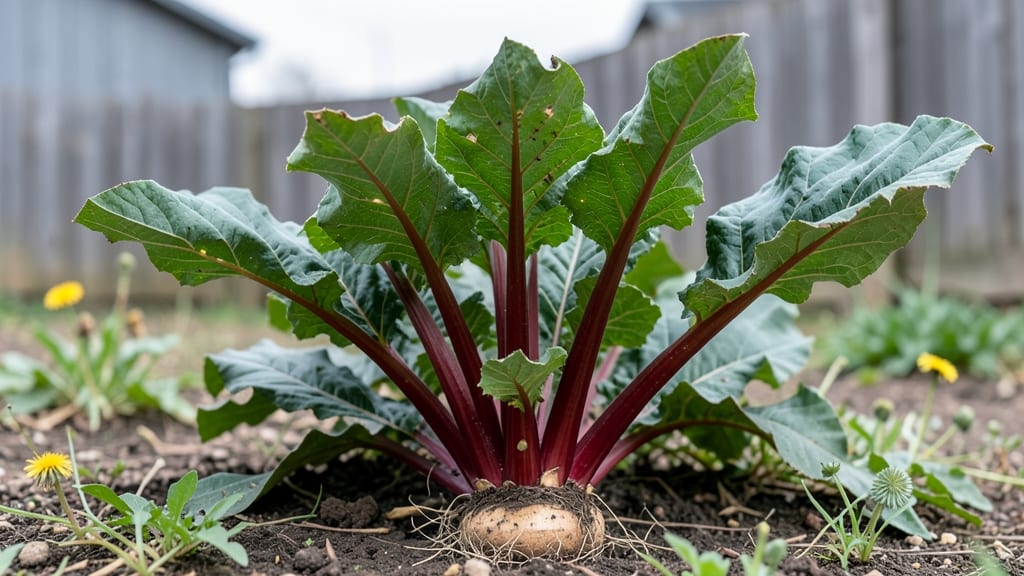
Rhubarb plants live for 10 to 20 years or longer with proper care, thriving as hardy perennials when planted in well-drained soil and given full sun. Regular pruning and winter protection extend their lifespan significantly.
Rhubarb's remarkable lifespan comes from its deep, fibrous root system that stores nutrients year-round, allowing it to rebound after harsh winters. 🌱 In my experience, the key to hitting that 20-year mark lies in mimicking its natural growing conditions—think of it as creating a mini-Alpine environment in your garden, since rhubarb originates from mountainous regions.
The plant's ability to handle cold temperatures (USDA zones 3-9) makes it one of the most resilient perennials, but it's the consistent care that truly makes the difference over decades.
What often surprises gardeners is how quickly neglected rhubarb declines—poor drainage or overwatering can turn a 20-year plant into a 2-year casualty. I've seen firsthand how a simple winter mulch layer can mean the difference between a thriving crown and one that struggles to regrow each spring.
The secret isn't just longevity—it's about maintaining that productivity year after year.
💡 In This Article
- Rhubarb Plant Lifespan Factors and Growth Biology
- Maximizing Rhubarb Plant Longevity with Care Tips
Rhubarb plant lifespan factors and growth biology
The secret to rhubarb's impressive lifespan lies in its thick, fibrous root system that can extend 3-4 feet deep and spread horizontally up to 6 feet in mature plants. This extensive network acts like a natural storage unit, accumulating starches and nutrients during summer to fuel regrowth in spring.
Unlike annuals that die back completely, rhubarb's roots remain dormant but alive through winter, ready to push new shoots when conditions improve. 🌟
Rhubarb's cold-hardiness comes from its Alpine origins, where it evolved to survive -30°F temperatures in USDA zones 3-9. The plant's crown (where stems meet roots) contains specialized cells that produce antifreeze proteins, similar to those in winter wheat, preventing ice crystal formation in tissues.
This biological adaptation explains why well-established rhubarb can bounce back from winter even when snow covers the ground for months. The key difference between zones is more about spring recovery speed than survival - plants in zone 3 may need 2-3 extra weeks to emerge compared to zone 6.
Growth cycles play a crucial role in longevity. While often called biennial (producing best stems in second year), mature rhubarb actually follows a polycarpic perennial pattern - it produces flowers and seeds only after 5-7 years of growth, conserving energy for stem production instead.
This delayed reproduction strategy allows the plant to focus resources on crown expansion and disease resistance, which is why properly cared-for plants can live decades. The trade-off? Older plants (over 10 years) may show reduced vigor as energy shifts from stems to seed production.
Crown health is the single most critical factor in longevity. A healthy crown maintains 2-3 inches of insulation from winter soil temperatures, which can drop to 20°F even in zone 6.
The plant's natural defense against rot comes from its high polyphenol content in root tissues, which acts as a natural preservative.
However, this protection breaks down when crowns are damaged by voles or poor drainage, leading to fungal infections like crown rot that can kill plants in 2-3 years rather than decades. 💛
Disease resistance becomes more important with age. Older rhubarb plants develop thicker cuticles on leaves and stems, making them less vulnerable to rust fungus and leaf spot diseases that plague younger plants. The plant's natural defense system includes producing phytoalexins - chemical compounds that form a barrier against pathogens.
This biological armor explains why well-established rhubarb often outlives other perennials in the same garden conditions, even when exposed to the same pests and diseases.
What most gardeners don't realize is how soil microbial communities develop around mature rhubarb roots. Over years, the plant cultivates beneficial fungi like mycorrhizae that extend its root system by 30-50%, improving nutrient uptake. These symbiotic relationships create a self-sustaining ecosystem that maintains plant health with minimal external intervention.
The result? A 20-year-old rhubarb plant can produce 50% more stems per season than a 5-year-old plant in identical conditions. ✨
The longevity advantage becomes clear when comparing rhubarb to other perennials. While asparagus (another long-lived perennial) typically lives 15-20 years, rhubarb's root system architecture allows it to recover from 50% crown damage that would kill most other perennials.
This resilience explains why historic rhubarb plants in 19th-century gardens often still produce today - their original root systems simply adapted to modern conditions. The lesson? Rhubarb doesn't just live long - it evolves with its environment. 🌱