
Shrubs
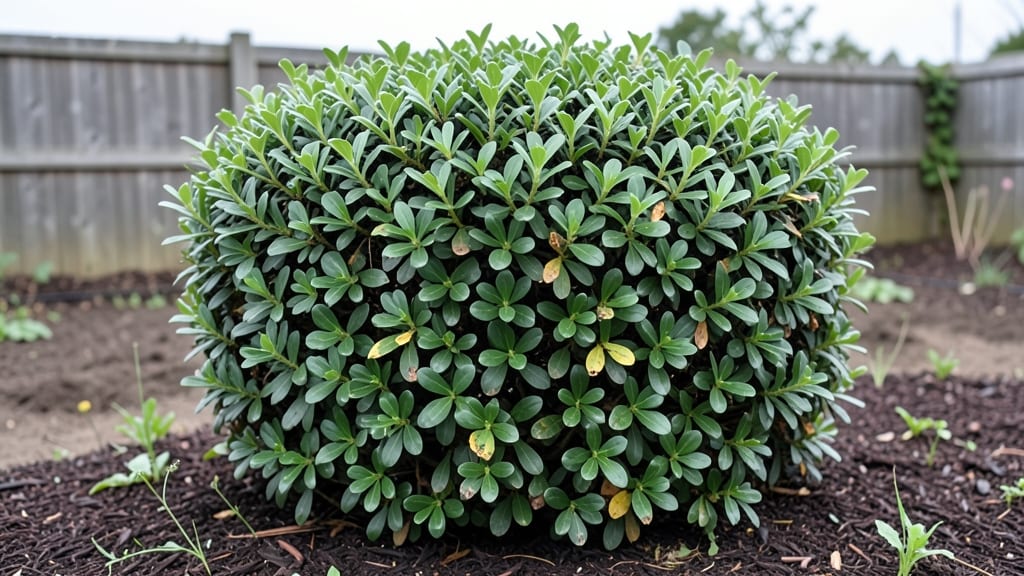
Those towering large shrubs for privacy I planted—like arborvitae and leyland cypress—turned my backyard into a secluded oasis almost overnight. a private sanctuary. These shrubs aren’t just about blocking eyes; they mute traffic noise, create windbreaks, and even add value to your home.
The right shrubs grow 12–24 inches per year, so you’ll see noticeable results by next summer. Evergreens like arborvitae and privet stay dense year-round, while deciduous options like bamboo or willow offer seasonal interest.
Most thrive in full sun to partial shade, and their low-maintenance nature means less work for you—just occasional pruning to keep them shaped.
By the end of the first growing season, you’ll have a lush, living barrier that feels like it’s been there for years. The foliage grows thick enough to block line-of-sight completely, and the scent of pine or fresh green leaves adds to the tranquility.
Plus, you’ll love how these shrubs attract birds while keeping your space private.
Whether you’re lining a fence, framing a patio, or creating a windbreak, these shrubs adapt to almost any yard. We’ll cover spacing, sunlight needs, and how to layer them with flowering plants for extra beauty. Let’s get your privacy screen growing fast!
Why Privacy Barriers Fail
Understanding why some shrubs struggle to create effective privacy screens—even when planted with good intentions—can help you avoid common pitfalls. Here’s a breakdown of the key reasons, explained in scientific terms with actionable insights.
Fast-growing shrubs are the gold standard for privacy, but genetic growth rates vary wildly. Some species may take 5–10 years to reach maturity, leaving gaps in your barrier during critical years.
For example: - Slow growers like Ilex glabra (inkberry holly) add only 12–24 inches per year, while rapid growers like Bamboo or Leyland Cypress can surge 3–5 feet annually. - Solution: Opt for hybrid varieties (e.g., Forsythia × intermedia) bred for accelerated growth.
Check nursery labels for annual growth rates—aim for 3+ feet per year for quick results.
Even the hardiest shrubs won’t fill gaps if planted too far apart. Mathematical spacing rules apply: - Rule of thumb: Space shrubs 1/3 of their mature width apart (e.g., a 6-foot-wide shrub should be planted 2 feet apart). - Common mistake: Planting in a straight line creates visible seams.
Instead, stagger rows in a brick-like pattern to hide gaps as foliage fills in. - Pro tip: 💡 Use narrow, tall shrubs (like Privet or Arborvitae) in front of wider ones to mask thinning areas during early growth.
Shrubs are living organisms, and environmental conditions can stunt growth or kill them prematurely.
Key culprits: - Soil pH imbalances: Most privacy shrubs thrive in slightly acidic to neutral soil (pH 6.0–7.0). Alkaline soil (pH >7.5) can lock out nutrients like iron and manganese, causing yellowing leaves and stunted growth. - Fix: Test soil with a home kit ($10) and amend with sulfur (to lower pH) or lime (to raise pH) as needed. - Poor drainage: Waterlogged roots suffocate shrubs, while drought stress weakens them. Ideal: Well-draining soil with 1–2 inches of water per week (more in extreme heat). - Fix: Amend clay soil with compost or sand, or plant on a slight slope to improve drainage. - Sunlight mismatches: Some shrubs (e.g., Hydrangeas) burn in full sun, while others (e.g., Boxwood) wilt in shade. - Fix: Match shrubs to your light conditions—check tags for "full sun," "partial shade," or "full shade" requirements.
Insects and pathogens can devastate shrubs before they reach privacy height. Common threats: - Spider mites & aphids: These sap-sucking pests weaken shrubs by reducing photosynthesis.
They thrive in dry, hot conditions. - Prevention: Spray with neem oil (organic) or insecticidal soap every 2–4 weeks during peak season (spring–summer). - Fungal diseases (e.g., powdery mildew): High humidity + poor airflow = fungal outbreaks.
Symptoms include white powdery spots on leaves. - Fix: Prune for airflow, avoid overhead watering, and apply copper fungicide at first sign of infection. - Root rot (Phytophthora): Overwatering or compacted soil creates anaerobic conditions, leading to root death. - Fix: Improve drainage with gravel or raised beds, and water deeply but infrequently.
Even the best shrubs won’t thrive without proper care. Neglect in these areas leads to failure:
- Over-pruning: Cutting back too aggressively (especially in late winter/early spring) removes next year’s growth buds.
- Fix: Prune after flowering (for spring bloomers) or in early summer to encourage bushier growth.
- Incorrect fertilizing: Too much nitrogen = leafy but leggy growth with weak structure. Too little = stunted growth.
- Fix: Use a balanced fertilizer (10-10-10 or 20-20-20) in early spring and mid-summer, following label rates.
- Ignoring seasonal needs: Some shrubs drop leaves in winter (deciduous) while others stay evergreen. Mixed plantings can create uneven coverage.
- Fix: Combine evergreens (e.g., Privet) with semi-evergreens (e.g., Oakleaf Hydrangea) for year-round interest.
Not all shrubs adapt equally to your local climate. Hardiness zones (USDA) dictate survival: - Cold-sensitive shrubs (e.g., Camellia) may die back in Zone 6 or colder. - Heat-loving shrubs (e.g., Olive Trees) can suffer in northern climates with short growing seasons. - Solution: Choose native or adapted species (e.g., American Holly for cold climates, Mexican Petunia for heat).
Check the USDA Plant Hardiness Zone Map before buying.
Some fast-growing hybrids (e.g., Leyland Cypress) are prone to disease (e.g., Seiridium canker) or weak wood structure, leading to splitting or dieback.
- Fix: Opt for disease-resistant cultivars (e.g., ‘Green Giant’ Arborvitae instead of standard Leyland Cypress).
- Diversify: Mix 3–5 different shrub species to reduce risk if one fails.
Privacy barriers fail most often due to a mix of biology, environment, and human factors.
By matching shrubs to your climate, soil, and sunlight, spacing them correctly, and maintaining them properly, you can eliminate gaps and create a lush, noise-blocking screen in 2–5 years. 🚀
Quick Fixes for Privacy Shrub Problems
Creating a lush, noise-blocking privacy hedge with large shrubs isn’t just about planting—it’s about maintaining them smartly. Whether you’re dealing with slow growth, pests, or uneven coverage, these practical solutions will help you transform your yard into a serene, private retreat.
Let’s tackle common challenges with step-by-step fixes and pro tips to keep your shrubs thriving.
Cause: Poor soil, inadequate sunlight, or improper watering can stunt growth, leaving gaps in your privacy screen.
How to Solve It: 🔥 Boost Soil Fertility Start with a soil test (kits are cheap and available at garden centers) to check pH and nutrient levels. Most shrubs thrive in slightly acidic to neutral soil (pH 6.0–7.0). Amend the soil with:
- Compost (for organic matter)
- Aged manure (for nitrogen)
- Slow-release fertilizer (like 10-10-10) in early spring
🍳 Feed Them Right Apply a balanced fertilizer (like 12-12-12) in early spring and mid-summer. For nitrogen-loving shrubs (e.g., arborvitae, privet), use a high-nitrogen fertilizer (like 20-5-10) in spring. Avoid over-fertilizing—it can burn roots!
👨🍳 Water Wisely
- Deep watering (1–2 inches per week) encourages root growth.
- Mulch heavily (3–4 inches of wood chips or bark) to retain moisture and regulate temperature.
- Drip irrigation is ideal—it delivers water directly to roots without waste.
✨ Pro Tip: If your shrubs are brand new, consider root stimulator (like liquid seaweed extract) to jumpstart growth. For established shrubs, a slow-release granular fertilizer in planting holes can give them a growth boost for years.
Cause: Bugs (aphids, spider mites, borers) and diseases (fungal spots, powdery mildew) can weaken or kill shrubs, leaving your privacy screen patchy.
How to Solve It: 🔪 Early Detection = Easy Fixes
- Inspect leaves weekly for holes, discoloration, or webbing.
- Shake branches over a white sheet—pests like aphids or mites will reveal themselves.
🌡️ Treat Pests Naturally First
| Pest | Signs | Fix |
|---|---|---|
| Aphids | Sticky residue (honeydew), curled leaves | Spray with soapy water (1 tsp mild soap + 1 quart water) or neem oil. Introduce ladybugs (natural predators). |
| Spider Mites | Tiny webs, yellowing leaves | Blast off with water spray, then treat with neem oil or horticultural oil. |
| Borers | Sawdust-like frass, wilting | Apply beneficial nematodes (like Heterorhabditis bacteriophora) to soil. Prune and destroy infested branches. |
| Caterpillars | Chewed leaves, frass trails | Handpick or use Bt (Bacillus thuringiensis)—a bacteria-safe for pets/kids. |
🎯 Prevent Disease Spread
- Prune in dry weather (never when leaves are wet).
- Sterilize pruners with rubbing alcohol between cuts.
- Space shrubs properly (3–6 feet apart) for airflow—fungus loves crowded, damp conditions.
- Avoid overhead watering—use soaker hoses instead.
✨ Pro Tip: Preventative sprays like copper fungicide (for blight) or kaolin clay (for pests) can be applied before problems start. For severe infestations, consult a local extension service for targeted solutions.
Cause: Over-pruning, poor spacing, or aggressive trimming can create lopsided or sparse hedges.
How to Solve It: 👨🍳 Prune Strategically
- Shape in layers: Start with the top, then work downward to avoid "bald spots."
- Use sharp shears—dull blades tear leaves, inviting disease.
- Prune at a 45-degree angle just above a leaf node to encourage bushier growth.
🔪 Corrective Pruning Steps
- Identify the problem areas (thin spots, overgrown sections).
- Thin out crowded branches (remove 1/3 of the oldest stems at the base).
- Encourage filling-in by trimming just above a set of healthy leaves.
- Fertilize after pruning to support regrowth.
🌱 Fill Gaps Fast
- Plant "filler" shrubs between gaps (e.g., dwarf lilacs, boxwood, or holly).
- Use fast-growing varieties like bamboo (if non-invasive types are chosen) or Russian olive for quick coverage.
- Layer mulch around new plants to retain moisture while they establish.
✨ Pro Tip: If your hedge is severely uneven, consider shearing in stages (e.g., trim 1/3 off one side one month, the other side the next) to avoid shocking the plants. For evergreens, a light trim in late winter keeps them dense.
Cause: Storms, high winds, or heavy snow can bend, break, or uproot shrubs, leaving your privacy screen vulnerable.
How to Solve It: 🌪️ Strengthen Weak Shrubs
- Stake young or flexible shrubs (like arborvitae) with flexible tree ties and bamboo stakes before storms.
- Prune weak branches in early spring to reduce wind resistance.
- Plant windbreak shrubs (e.g., eastern red cedar, privet) on the windward side of your hedge.
🏗️ Repair After Damage
- Secure broken branches with soft wire or cloth strips (avoid plastic—it can girdle stems).
- Replace uprooted shrubs immediately—bare-root plants can be replanted in winter for best survival.
- Mulch heavily after storms to protect roots from temperature swings.
✨ Pro Tip: Evergreens (like leucothoe or inkberry) handle wind better than broadleaf shrubs. If you live in a high-wind area, choose naturally compact varieties (e.g., 'Emerald Green' arborvitae).
💡 Final Prevention Checklist
- Test soil annually and amend as needed.
- Water deeply but infrequently (encourages deep roots).
- Prune 2–3 times a year (spring, summer, light winter trim for evergreens).
- Monitor for pests/disease—act fast!
- Choose disease-resistant varieties (e.g., 'Nellie R. Stevens' holly, 'Green Giant' arborvitae).
With these fixes, your fast-growing privacy shrubs will stay lush, healthy, and effective for years—blocking noise, winds, and prying eyes like a pro! 🌿🔒
Frequently asked questions about privacy shrubs
How tall should I plant my privacy shrubs to reach my desired height?
For a 6-foot-tall hedge, plant 3-foot-tall shrubs 6–8 inches deep—this ensures roots establish before new growth takes off. For 10-foot barriers, use 5-foot starter plants spaced 3–4 feet apart to fill gaps faster. Pro tip: Dig a hole twice as wide as the root ball to encourage outward root spread.
Can I mix evergreen and deciduous shrubs for year-round privacy?
Evergreens like arborvitae or privet provide winter coverage, while deciduous options like bamboo or willow add seasonal interest. Stagger planting so deciduous shrubs fill gaps when evergreens are dormant. Just ensure both types share similar water and sunlight needs.
How do I prevent my privacy hedge from looking patchy?
Space shrubs 1/3 of their mature width apart (e.g., 2 feet for a 6-foot-wide shrub) and stagger rows like bricks. Use fast-growing fillers (like dwarf lilacs) in gaps, and prune after flowering to encourage bushy growth. Avoid cutting into old wood—always trim just above a leaf node.
Are there shrubs that grow faster than arborvitae?
Yes! Bamboo (non-invasive varieties like Fargesia) grows 3–5 feet per year, while leyland cypress can reach 3–4 feet annually. For broader coverage, try Russian olive or privet, which both hit 2–3 feet per year. Always check local regulations—some areas restrict bamboo due to invasiveness.
How much sunlight do most privacy shrubs need?
Most privacy shrubs thrive in full sun (6+ hours daily), but some like hydrangeas or boxwood prefer partial shade (3–6 hours). For shade-tolerant options, choose inkberry holly or leucothoe. Always match the shrub to your yard’s light conditions—check plant tags for specific needs.