
Shrubs
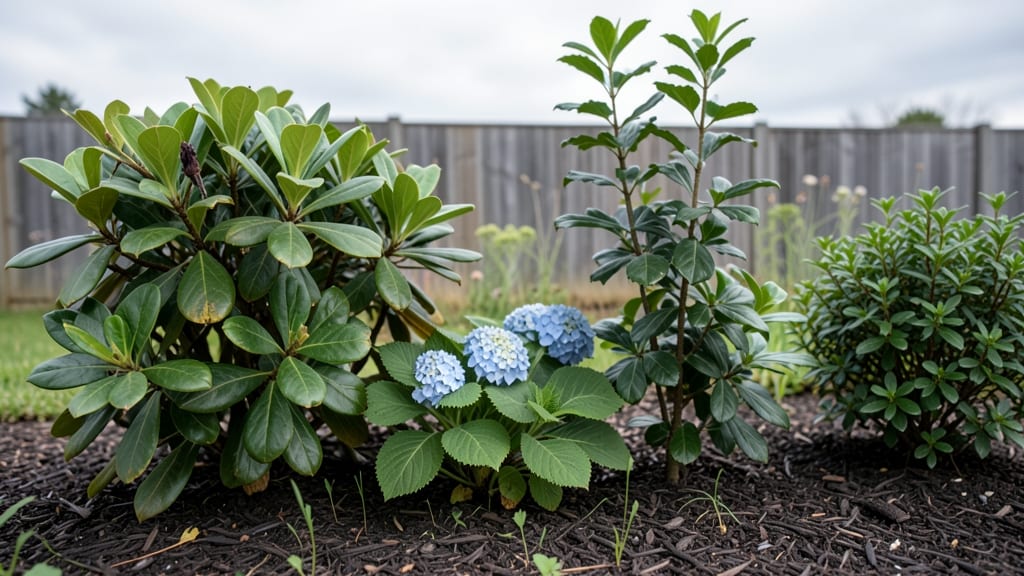
Master shrub identification by leaves with this foolproof trick—no green thumb or degree needed to decode the clues nature hands you. 🌿 The secret lies in just three details: leaf shape, edge texture, and how they attach to the stem.
My first mistake was overcomplicating it with Latin names, but once I focused on these basics, I could spot shrubs in my yard within seconds.
Start with leaf edges—smooth like a boxwood or jagged like a holly—and note their arrangement. Alternate leaves grow in a spiral, while opposite leaves pair up like boxwoods or viburnums.
Texture matters too: waxy, fuzzy, or hairy leaves narrow it down fast. I’ve used this method to identify everything from dwarf lilacs to inkberry hollies without breaking a sweat.
By the end, you’ll match leaves to shrubs with confidence, even if you’ve only got a quick glance. No more guessing whether that mystery bush is a spirea or weigela—you’ll know instantly. The best part? This works for pruning, pest control, or just admiring your garden smarter.
Works for any yard, from urban backyards to wild landscapes. Let’s turn leaf-peeping into a skill you’ll use all season long.
Why Leaf Traits Vary So Widely
Identifying shrubs by their leaves can feel like solving a puzzle—especially when similar-looking species seem to defy easy classification. But why do leaves vary so dramatically between shrubs, even among those in the same family?
The answer lies in a mix of evolutionary adaptations, environmental pressures, and genetic quirks. Understanding these factors can sharpen your shrub-spotting skills and help you decode leaf shapes, textures, and arrangements like a pro.
Leaves aren’t just decorative—they’re the shrub’s ticket to survival. Over millions of years, plants have developed leaf traits that maximize their chances of thriving in specific conditions. Here’s how:
- 🌿 Sunlight Optimization
- Shrubs in full sun (like Rhus typhina, or staghorn sumac) often have smaller, thicker leaves to reduce water loss and avoid overheating.
- Those in shade (like Pieris japonica, or Japanese andromeda) grow larger, thinner leaves to capture every photon of light.
- Pro tip: 💡 Look for leaf orientation—sun-loving shrubs may have leaves that curl or fold to shield delicate tissue.
- 💧 Water Conservation Hacks
- Drought-resistant shrubs (e.g., Cercocarpus montanus, or mountain mahogany) often have:
- Leathery, waxy coatings (cuticle layer) to lock in moisture.
- Gray-green or silvery hues (from hairy trichomes) to reflect sunlight and reduce evaporation.
- Deeply lobed or serrated edges to create microclimates that trap humidity.
- Warning: ⚠️ Don’t confuse drought adaptations with disease—some shrubs (like Ligustrum) develop crispy, curled leaves from powdery mildew, not evolution!
- Drought-resistant shrubs (e.g., Cercocarpus montanus, or mountain mahogany) often have:
- 🐛 Pest & Predator Defense
- Spiny or jagged leaves (e.g., Berberis thunbergii, or Japanese barberry) deter herbivores like deer and rabbits.
- Toxic compounds in leaves (e.g., Rhododendron’s grayanotoxins) make them unappetizing—often paired with dark green, glossy surfaces as a warning sign.
- Fragrant leaves (like Osmanthus) release volatile oils that repel insects or attract beneficial predators.
Where a shrub grows shapes its leaves like a sculptor’s chisel. Climate, soil, and even elevation play starring roles in leaf development.
- 🌡️ Temperature & Humidity
- Tropical shrubs (e.g., Ilex varieties) thrive in high humidity and often have broad, smooth leaves with prominent veins for efficient water transport.
- Cold-hardy shrubs (e.g., Symphoricarpos albus, or snowberry) develop smaller, rounded leaves with reduced surface area to minimize frost damage.
- Fun fact: 🌡️ Some shrubs (like Viburnum dentatum) drop leaves early in fall to conserve energy—watch for premature leaf drop as a clue!
- 🪨 Soil & Nutrient Availability
- Poor, rocky soil (e.g., alpine regions) breeds shrubs with leathery, evergreen leaves (e.g., Juniperus) that conserve nutrients.
- Rich, moist soil encourages lush, large-leaved shrubs (e.g., Hydrangea macrophylla) with high metabolic demands.
- Red flag: 🚨 If a shrub’s leaves are yellowing or stunted, it might be nutrient-deficient—not a natural trait!
- 🌬️ Wind Exposure
- Coastal shrubs (e.g., Arctostaphylos, or manzanita) have small, thick leaves to resist wind damage.
- Inland shrubs (e.g., Cotoneaster) may grow larger, softer leaves with flexible stems to sway without snapping.
- Pro tip: ✨ Check for leaf “flagging” (one-sided growth) in windy areas—a sign of chronic stress.
Not all leaf variations are survival strategies—sometimes, it’s just genetics playing tricks. Here’s how:
- 🔄 Variegation & Mutations
- Some shrubs (like Euonymus alatus, or burning bush) develop variegated leaves (white, pink, or yellow edges) due to chlorophyll deficiencies—a genetic mutation that’s often sterile (can’t reproduce).
- Caution: ⚠️ Variegation can make identification harder—compare to the species’ standard leaf form.
- 🌿 Hybrid Vigor
- Crossbreeding (e.g., Lagerstroemia × hybrids) can produce leaves that blend traits—think uneven serrations, mixed textures, or intermediate sizes.
- Example: A Hydrangea hybrid might have some leaves smooth and others lobed—a clue it’s a mix of H. macrophylla and H. paniculata.
- 🌱 Juvenile vs. Mature Leaves
- Young shrubs (e.g., Taxus, or yew) often have softer, broader leaves that harden and shrink as they age.
- Actionable tip: 🔍 Compare new growth to older leaves—this can reveal a shrub’s true identity faster than relying on one trait alone.
Next time you’re puzzling over a shrub’s leaves, remember: every shape, color, and texture is a story of survival, adaptation, or genetic luck. Master these clues, and you’ll unlock the secrets of even the trickiest shrubs!
Mastering leaf ID with confidence
Got tangled in leafy confusion while trying to identify shrubs? Don’t worry—every gardener hits a snag when shapes, edges, and textures blend together. The good news? With the right approach, you’ll turn guesswork into effortless recognition in no time.
Below, we break down the most common pitfalls and provide practical, foolproof solutions to sharpen your shrub ID skills—plus tips to avoid future mix-ups.
Problem: Two shrubs have similar leaf shapes—how do you tell them apart? Solution: Start by layering your observations like a detective. Use this quick checklist:
- 🍃 Leaf Arrangement
- Alternate (one leaf per node, staggered) vs. opposite (pairs at each node).
- Whorled (3+ leaves per node) is rare but key for shrubs like Stewartia.
- 💡 Pro Tip: Snap a photo from above and below—arrangement is often the game-changer.
- 📏 Leaf Margins & Texture
- Serrated (sharp teeth), lobed (deep cuts), or entire (smooth edges)?
- Example: Hydrangea leaves are smooth-edged and serrated, while Viburnum often has sawtooth edges with a glossy finish.
- 🌡️ Test: Rub a leaf between your fingers—is it fuzzy (Rhododendron), leathery (Boxwood), or papery (Forsythia)?
- 🍁 Leaf Venation
- Pinnate (veins branch from a central midrib, like Lilac).
- Palmate (veins radiate from one point, like Cotoneaster).
- ✨ Quick Hack: Hold the leaf up to light—venation patterns reveal hidden clues.
- 🌿 Stem & Bark Tricks
- Scent: Crush a leaf—Lavender shrubs (like Ceanothus) often release a fragrance.
- Bark: Peeling (Birch), ridged (Crape Myrtle), or smooth (Dogwood)?
- 🎯 Memory Trick: Pair leaf traits with a standout feature (e.g., Holly = spiky leaves + red berries).
Problem: You’re overwhelmed by field guides with jargon or outdated photos. Solution: Create a visual reference binder (digital or paper) with these steps:
- 📸 Take "Leaf Selfies"
- Photograph leaves from all angles (top, bottom, close-up of edges).
- 🔥 Tip: Use your phone’s macro mode or a magnifying glass for details.
- 📊 Organize by Traits
- Make a table with columns:
- Shape (oval, lance-shaped, etc.)
- Margin (serrated, lobed)
- Color (green, variegated, purple underside)
- Unique Feature (thorns, hairy stems, etc.)
- Example:
- Make a table with columns:
| Shrub | Leaf Shape | Margin | Color | Unique Feature |
|---|---|---|---|---|
| Boxwood | Oval | Entire | Dark green | Leathery, dense growth |
| Rhododendron | Elliptical | Serrated | Glossy green | Fuzzy underside |
- 🔍 Cross-Reference with Flowers/Fruit
- If leaves are identical but flowers differ (e.g., White vs. Pink Lilac), note the bloom time and color.
- 💡 Pro Tip: Bookmark iNaturalist or PlantNet for crowd-sourced ID help.
Problem: Leaves change with seasons—how do you ID a shrub in winter? Solution: Adapt your approach based on the season:
| Season | Focus On | Example Shrubs |
|---|---|---|
| Spring | New leaf color/texture + buds | Dogwood (red stems), Azalea (hairy buds) |
| Summer | Full leaf shape + growth habit | Hydrangea (large, flat leaves) |
| Fall | Leaf color change (red/purple) | Smoke Tree (fiery orange) |
| Winter | Bark texture + dormant buds | Crape Myrtle (peeling bark) |
🎯 Prevention Tip: Label your shrubs in summer with stakes or plant tags—save yourself winter headaches!
Problem: You’re unsure which of 3 similar shrubs you have. Solution: Use process of elimination with these steps:
- 🚫 Rule Out the Obvious
- Does it have thorns? → Likely Rose or Hawthorn.
- Evergreen? → Narrow to Boxwood, Holly, or Juniper.
- 🔍 Compare with Known Samples
- Rub a leaf against a known shrub’s leaf (e.g., Boxwood vs. Lonicera).
- 🔥 Test: Drop a leaf in water—does it float (Willow-like) or sink (dense shrubs)?
- 📞 Ask the Experts
- Post photos to Facebook Gardening Groups or Reddit’s r/whatsthisplant.
- ✨ Bonus: Local nursery staff often recognize regional shrubs instantly.
Avoid future mix-ups with these habits:
- 📅 Seasonal Check-Ins: Inspect shrubs monthly—note changes in leaf shape or color.
- 📖 Keep a Plant Journal: Sketch or photograph new additions to your garden.
- 🌱 Start Small: Master 5 easy shrubs (Boxwood, Lilac, Hydrangea, Rhododendron, Holly) before tackling rarer species.
- 🌿 Learn "Red Flags":
- Pest damage? (Holes = caterpillars; yellowing = fungus.)
- Unusual growth? (Twisted leaves = possible Bacterial Leaf Scorch.)
Final Thought: Mistakes happen—even experts double-check! The key is to slow down, layer your observations, and trust the details. Soon, you’ll glance at a leaf and instantly know whether it’s a Viburnum or a Weigela. Happy identifying! 🌿🔍
Frequently asked questions
What are the most important leaf features to check first when identifying shrubs?
Start with three key traits: leaf shape (oval, lance-shaped, etc.), edge type (smooth, serrated, lobed), and arrangement (alternate, opposite, or whorled). These three clues will narrow down possibilities faster than any other factors. For example, opposite leaves with smooth edges likely mean boxwood, while serrated edges on alternate leaves might point to viburnum.
How do I tell the difference between similar-looking shrubs like boxwood and holly?
Compare leaf texture and growth habit: Boxwood leaves are small, leathery, and grow in opposite pairs with no thorns, while holly leaves are often spiny-edged with alternate arrangement and may have sharp thorns. Holly also typically produces berries, which boxwood never does. A quick test is to rub the leaves—boxwood feels smoother and denser.
Can I identify shrubs by leaves alone, or do I need to look at flowers/fruit too?
While leaves provide 80% of the clues, flowers and fruit can confirm the ID. For example, lilac and privet both have opposite leaves, but lilacs have fragrant spring blooms while privet produces small black berries. In winter, when leaves are absent, focus on bark texture and dormant buds instead. For tricky cases, take photos of all plant parts for comparison.
Why do some shrubs have fuzzy or hairy leaves, and does it matter for identification?
Hairy leaves often indicate adaptation to dry conditions or pest resistance. For ID purposes, it’s a game-changer: Shrubs like rhododendron or azalea have fuzzy undersides, while hydrangea leaves are smooth. Run your finger along the leaf—if it feels velvety, you’re likely dealing with an Ericaceae family member (like azaleas or mountain laurels).
What should I do if I can't find my shrub in any guide?
Start by narrowing the possibilities: Is it evergreen or deciduous? Does it have thorns, fragrant leaves, or unique bark? Take high-quality photos from multiple angles and post them to community forums like r/whatsthisplant or iNaturalist. Include your location—many shrubs are regional. If it’s a hybrid, it might not be in standard guides. Consider consulting a local nursery or university extension office for expert help.