
Flowers
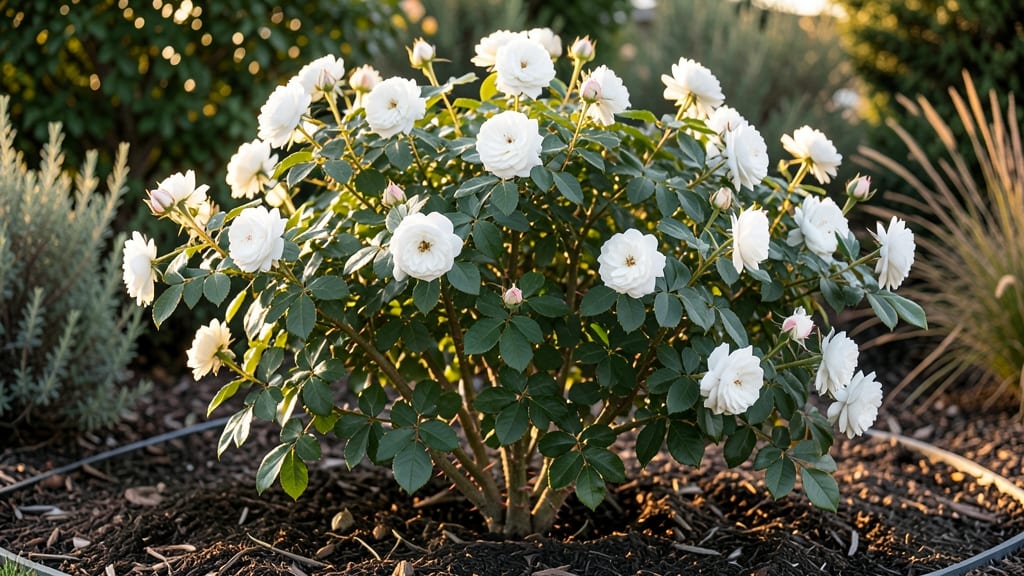
White shrub roses transform any garden into a cloud of delicate blooms—thorn-free and effortlessly elegant. 🌿 I’ve grown these varieties for years, and the secret to their lush, bushy habit isn’t complicated: it’s all in the pruning.
Three strategic cuts a year keep them blooming like crazy while avoiding the tangled mess of traditional roses.
The right variety makes all the difference—look for disease-resistant types like ‘Knock Out’ or ‘Dr. Huey’ that thrive in full sun and well-draining soil.
Most beginners struggle with over-pruning or neglecting winter care, but once you master these basics, your roses will reward you with nonstop blooms from early summer through fall.
By spring, you’ll see sturdy canes covered in buds, and the fragrance alone makes it worth the effort. These roses play well with perennials, shrubs, and even small trees, creating a soft, romantic backdrop for any garden design.
Whether you’re dealing with pests, winter prep, or shaping your plant, this guide keeps it simple—no horticulture degree required. Let’s get those roses thriving!
📚 In This Guide
- What you need
- Instructions
- Tips and common mistakes
- Wrapping up and next steps
What you need
- ● White shrub rose plants: Choose disease-resistant varieties like 'Knock Out' or 'Dr. Huey' (1-3 plants, depending on desired coverage).
- ● Well-draining soil: A mix of native soil, compost (3-5 gallons), and perlite or sand (1 part perlite/sand per 3 parts soil) for optimal aeration.
- ● Organic fertilizer: A balanced 10-10-10 or rose-specific fertilizer (1 lb per plant) to kickstart growth.
- ● Pruning shears: Sharp, bypass-pruning shears (or loppers for thicker stems) to ensure clean cuts.
- ● Garden gloves: Heavy-duty, thorn-resistant gloves (e.g., Mechanix or rose-specific gloves) for safety.
- ● Mulch: 2-3 inches of organic mulch (shredded bark or straw) to retain moisture and suppress weeds.
- ● Watering can or hose with a gentle spray nozzle: For deep, consistent watering (avoid overhead sprinklers to prevent fungal issues).
- ○ Staking or support system (optional but recommended): 4-6 ft bamboo stakes or a rose trellis to support new growth.
- ● Epsom salt: 1 tbsp dissolved in water monthly for magnesium boost (especially for yellowing leaves).
- ● Rose food spray: Liquid fertilizer for quick nutrient absorption during blooming season.
- ● Fungal preventative: Copper fungicide or neem oil spray (pre-mixed or DIY) to ward off black spot or powdery mildew.
- ● Garden twine or plant ties: For securing stakes to young, flexible canes.
- ○ Pruning sealant: A natural wax-based sealant to protect cuts (optional for small prunes).
How to prune a white shrub rose for a thorn-free, lush canopy
Here’s the method I’ve used for years to turn tangled, thorny shrub roses into dense, thorn-free beauties—no special tools, just sharp shears and a little strategy.
✂️ Step 1: Prune for Structure in Late Winter
Wait until your last frost date has passed but before buds swell—this is your 6-8 week window before spring growth kicks in. Grab your clean, sharp pruners (sterilized with rubbing alcohol) and start by removing dead, crossing, or inward-growing branches. These compete for energy and create weak spots. I like to cut back to an outward-facing bud or a strong lateral branch—this ensures new growth will fill out the center.
Next, shape the plant by cutting back 1/3 of last year’s growth on each stem. Look for the strongest, healthiest canes—these will support the most blooms. If a branch is thinner than a pencil, it’s too weak to keep. You’ll know you’re doing it right when the plant looks balanced, with no bare spots at the center. This first prune is all about opening up the canopy so light and air circulate.
✂️ Step 2: Light Prune After First Blooms Fade
Once your white shrub roses finish their first flush of blooms—usually 6-8 weeks after spring pruning—it’s time for a light maintenance trim. Deadhead spent blooms by cutting back to the first set of healthy leaves below the flower. This encourages the plant to redirect energy into new growth rather than seeding.
Now, look for any suckers (shoots growing from the base or along the stem) that aren’t part of your main structure. These drain energy from the plant. Snip them off at the base with your pruners. Also, check for weak or leggy branches—these often grow in shady spots. Cut them back by half their length to promote bushier growth. The goal here is to keep the plant compact and full without overdoing it.
✂️ Step 3: Heavy Prune for Renewal in Mid-Summer
Around July or early August, give your white shrub rose a rejuvenating prune to prepare for next year’s blooms. This is where you’ll do 50% of the plant’s total pruning—yes, it sounds drastic, but it works. Start by removing any dead, diseased, or weak wood first. Then, cut back 1/3 of the oldest canes to the ground. These are the branches that no longer produce well and are crowding out younger growth.
For the remaining branches, trim back half their length, again cutting to an outward-facing bud. You’ll be left with a plant that looks sparse for a few weeks, but don’t worry—new shoots will sprout from the base and fill in quickly. This mid-summer prune stimulates fresh, thorn-free growth and prevents the plant from becoming overgrown and woody. Water deeply after pruning to help the plant recover.
🌿 Step 4: Clean Up and Protect for Winter
As temperatures drop and new growth slows in late fall, do a final tidy-up. Remove any dead leaves, spent blooms, or weak stems that haven’t responded well to earlier pruning. This keeps pests and diseases from hiding over winter. Now, give your rose a light layer of mulch (about 2-3 inches) around the base, but keep it 6 inches away from the trunk to prevent rot.
Here’s the thing—I’ve seen roses left unpruned for years, and while they do survive, they become thorny, leggy, and sparse. The key is consistent, strategic pruning to keep the plant healthy, thorn-free, and blooming like crazy. After this routine, your white shrub rose will reward you with a lush, canopy-like display that’s easy to maintain and even easier to enjoy.
Tips & tricks for perfect white shrub rose pruning
Here's what nobody tells you about transforming those tangled thorny monsters into elegant, blooming shrubs.
Timing is Everything: That 6-8 week window before buds swell in Step 1 is your golden opportunity. Check your local last frost date—pruning too early risks cold damage, while waiting too long means you're fighting last year's growth. I always mark my calendar for February 1st as my target start date in most climates, but adjust based on your zone. The goal is to catch the plant while it's still dormant but ready to wake up.
The 45-Degree Rule: When cutting back branches in Step 1 and Step 3, make your cuts at a 45-degree angle just above an outward-facing bud. This creates a natural water runoff and protects the bud from rot. I learned this the hard way after seeing multiple cuts fail to produce new growth—always cut at that angle! For the mid-summer prune (Step 3), this is especially critical since you're making more aggressive cuts that need to heal properly.
Tool Maintenance Matters: Your pruners are your most important tool, but most people neglect them. After each use, wipe them clean with rubbing alcohol (as mentioned in Step 1) and oil the blades with a few drops of mineral oil. Sharp, clean tools make precise cuts that heal faster and reduce disease risk. I keep a small bottle of rubbing alcohol in my gardening tool shed specifically for this purpose—it's the secret to keeping your roses healthy between prunings.
Visual Cues for Pruning Success: After your Step 1 prune, your plant should look like an open umbrella with no bare center. In Step 3, you'll see new shoots emerge from the base within 2-3 weeks—these are your plant's way of telling you it's happy with the dramatic prune. The key visual is seeing light penetrate all the way to the center of the plant, which means you've successfully opened up that canopy for better air circulation and bloom production.
Pro Tips for White Shrub Rose
- Here's what nobody tells you about transforming those tangled thorny monsters into elegant, blooming shrubs.
- Timing is Everything: That 6-8 week window before buds swell in Step 1 is your golden opportunity.
- The 45-Degree Rule: When cutting back branches in Step 1 and Step 3, make your cuts at a 45-degree angle just above an outward-facing bud.
Frequently asked questions
Got questions about growing and maintaining your white shrub rose? You’re not alone! Here are some of the most common queries—plus quick, actionable answers to keep your thorn-free beauty thriving.
When is the best time to prune my white shrub rose?
Prune your white shrub rose in early spring (just as new growth starts) and again after the first flush of blooms in late spring. Avoid heavy pruning in fall—it can stimulate tender new growth that won’t survive winter. Pro tip: Always use clean, sharp shears to prevent disease!
How do I keep my white shrub rose from getting diseases like black spot?
Prevent fungal issues by ensuring 6–8 hours of sunlight daily and spacing plants 3–4 feet apart for airflow. Water at the base (avoid wetting leaves) and remove fallen debris promptly. For extra protection, apply a copper fungicide in spring if your area is prone to black spot.
Can I grow a white shrub rose in a container?
Choose a large pot (at least 15–20 gallons) with drainage holes and use a well-draining potting mix (add perlite or sand). Container roses need more frequent watering and fertilizer (every 2–3 weeks in growing season). Just ensure it gets full sun—partial shade may reduce blooms.
How do I protect my white shrub rose in winter?
Mulch the base with 3–4 inches of organic mulch (straw or shredded bark) after the ground freezes. For harsh winters, wrap young plants in burlap or use a rose cone to shield buds. Avoid pruning until late winter—dormant plants handle cold better!
Why aren’t my white shrub roses blooming as much as they used to?
Over-pruning, poor nutrition, or too much shade can reduce blooms. Feed with a balanced rose fertilizer (10-10-10) in spring and summer, and deadhead spent blooms to encourage new flowers. If blooms are sparse, check for aphids or mites—treat with neem oil if needed.
Wrapping up and next steps
Growing a thorn-free white shrub rose is not just about aesthetics—it’s a rewarding journey of patience and care that transforms your garden into a serene, low-maintenance paradise. 🌸 With the right pruning techniques, soil prep, and a little TLC, you’ll enjoy blooms that last and a space that feels like a retreat.
Ready to take the next step? Start by marking your pruning calendar and watch your rose thrive—one strategic cut at a time!