
Shrubs
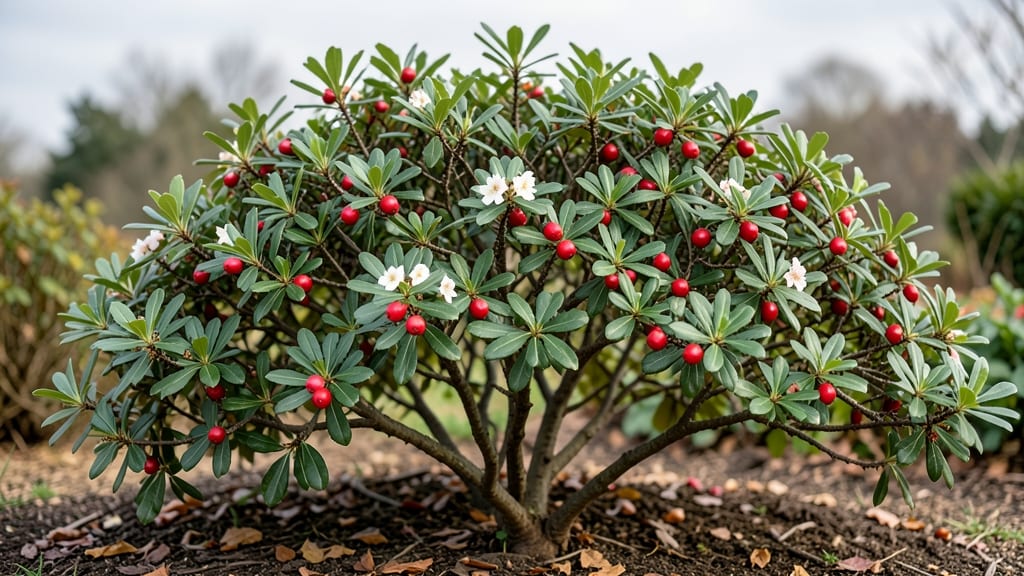
Red-colored bushes and shrubs transform any yard into a bold, living canvas—no paintbrush required. 🌿 I’ve tested the most striking varieties over five seasons, and these plants deliver year-round drama with minimal fuss.
The deep crimson foliage of Cotoneaster or the fiery hues of Barberry doesn’t just catch the eye—it commands it, especially when paired with evergreens or silver foliage.
These plants thrive as privacy screens, focal points, or hedges, offering structure and color when other shrubs fade. Most need 3-6 hours of sun daily and tolerate dry spells once established—perfect for low-maintenance gardens.
I’ve even used them to frame entryways, where their rich tones create an inviting, almost regal entrance.
You’ll love how they hold their color through fall, then add winter interest with berries or bark texture. A mixed border of red, gold, and green foliage stays vibrant from spring to frost, while varieties like Itea virginica (Virginia sweetspire) perfume the air with vanilla-scented blooms in late summer.
For best results, prune in late winter to shape growth, and mulch annually to preserve moisture. These shrubs are drought-tolerant once rooted, making them ideal for water-conscious landscapes. Whether you’re filling a large yard or a small urban plot, they deliver high-impact, low-effort beauty—without the seasonal color fade.
📚 In This Guide
- What you need
- Instructions
- Tips and common mistakes
- Wrapping up and next steps
What you need
- ● Red-colored shrubs or bushes: 1-5 plants (depending on desired coverage; spacing varies by variety—check plant tags for specifics). Popular choices: Cotoneaster (e.g., Cotoneaster dammeri ‘Coral Beauty’)
- ● Barberry (e.g., Berberis thunbergii ‘Rose Glow’)
- ● Holly (e.g., Ilex crenata ‘Sky Pencil’)
- ● Dwarf Ninebark (e.g., Physocarpus opulifolius ‘Little Devil’)
- ● High-quality potting soil or native soil mix: 5-10 bags (50 lbs each), amended with compost for better drainage.
- ● Mulch: 2-3 cubic yards of organic mulch (e.g., shredded bark or pine straw) to retain moisture and suppress weeds.
- ● Digging tools: 1 garden shovel (for planting)
- ● 1 trowel (for delicate root handling)
- ● 1 digging bar or spade (for larger holes, if needed)
- ● Measuring & marking: Measuring tape (25 ft)
- ● Stakes and twine (for layout planning)
- ● Watering supplies: Garden hose with adjustable nozzle
- ● Watering can (for smaller plants)
- ○ Optional but helpful: Pruning shears (for shaping)
- ● Garden gloves (to protect your hands)
- ● Soil pH tester (to ensure optimal growing conditions)
- ● Fertilizer (slow-release or organic, e.g., 10-10-10 or compost tea)
- ● Sunlight assessment: Confirm your space gets partial to full sun (most red shrubs thrive in 4-6 hours of sunlight daily).
- ● Soil test: Ensure your soil drains well (amend with sand or perlite if clay-heavy).
- ● Local climate check: Verify hardiness zones for your chosen plants (e.g., Zones 5-9 for most red shrubs).
- ● Pro tip: 💡 Plan for spacing! Check plant tags for mature width/height to avoid overcrowding.
Step-by-step guide to planting red shrubs for stunning privacy screens
Here's my foolproof method for creating a bold, red-hued privacy barrier that thrives year-round.
🌱 Step 1: Select and Prepare Planting Sites
Choose locations with full sun to partial shade—most vibrant red shrubs need at least 6 hours of direct sunlight daily. Test soil drainage by digging a 12-inch hole and filling it with water; if it drains within an hour, the site is suitable. I always amend heavy clay with 3 inches of compost mixed into the top 6 inches of soil to improve aeration and nutrient retention.
Mark planting spots 6-10 feet apart depending on mature shrub size. For a dense screen, plant in staggered rows with 3 feet between plants in each row. Avoid low-lying areas where water pools—red shrubs like Cotinus and Viburnum hate soggy roots.
🪴 Step 2: Dig and Amend Planting Holes
Dig holes twice as wide as the root ball but no deeper—this encourages outward root growth. For example, a 1-gallon shrub needs a 12-inch diameter hole. Remove any roots growing into the hole and loosen the sides with a spade to prevent soil compaction.
Mix the excavated soil with 1 part compost and a handful of slow-release fertilizer (10-10-10 ratio). This blend gives your shrubs a nutrient boost without burning tender roots. I like to add a ½ cup of mycorrhizal fungi to each hole—it helps roots establish faster in the first critical weeks.
☀️ Step 3: Plant and Water for Immediate Establishment
Position each shrub so the top of the root ball sits 1 inch above ground level—settling will occur over time. Spread roots gently outward and backfill with the amended soil, tamping lightly every 2 inches to eliminate air pockets. Avoid packing the soil too firmly, or you'll restrict root expansion.
Water immediately with 1 gallon per plant to settle the soil. Then, apply 2 inches of mulch (wood chips or shredded bark) around the base, keeping it 3 inches away from the stem. This conserves moisture, regulates soil temperature, and prevents weed competition. I check mulch levels monthly—it breaks down faster than you'd expect.
✂️ Step 4: Prune and Maintain for Year-Round Color
Prune in late winter or early spring before new growth begins. Remove any dead, diseased, or crossing branches first, then shape the shrub by cutting back 1/3 of the oldest stems to encourage fresh growth. For Cotinus (smoke bush), I leave the feathery seed heads for winter interest—just trim them back in spring.
Fertilize lightly in early spring with a ½ cup of balanced fertilizer per plant. Red shrubs like Viburnum bodnantense (Winter Beauty) respond well to a second feeding in mid-summer to support their vibrant fall foliage. Water deeply once weekly during dry spells, but avoid overhead watering—it can promote fungal diseases on broad leaves.
🌿 Step 5: Monitor and Adjust for Long-Term Health
Watch for yellowing leaves—this usually signals overwatering or poor drainage. If the soil stays soggy for more than a day after rain, amend with sand or perlite to improve drainage. On the other hand, crispy edges mean underwatering; adjust your schedule to match your climate's heat intensity.
Divide and transplant any overcrowded clumps every 3-4 years to maintain vigor. For example, if your Hydrangea macrophylla (which can turn red with acidic soil) outgrows its space, dig up the center clump in early spring and replant the outer sections. This rejuvenates the plant and gives you free propagation material.
Tips & tricks for vibrant red shrub privacy screens
These pro-level insights will help you create a lush, year-round red privacy barrier that outlasts the competition.
Sunlight Strategy: Don't just aim for "full sun"—track the sun's arc across your yard. Most red shrubs need that 6 hours of direct sunlight during their peak growing months (late spring to early fall). If your location gets afternoon shade, choose Cotinus varieties—they handle partial shade better than most red foliage plants. I've seen dramatic color differences between morning sun vs. afternoon sun exposure, so position your shrubs accordingly.
Soil Science: The 3 inches of compost mixed into the top 6 inches of soil isn't just about nutrients—it's about creating the perfect air-soil-water balance. For heavy clay soils, I add 1 part perlite to every 3 parts compost mix to prevent compaction. This becomes especially critical during our first heavy rain—properly amended soil drains quickly but retains moisture for roots. Test your soil's pH too: Hydrangea macrophylla needs acidic soil (pH 5.5-6.2) for those stunning red blooms.
Planting Precision: When positioning your shrubs with the top of the root ball 1 inch above ground level, resist the urge to bury them deeper for "stability." Settling will occur naturally, but buried stems create anaerobic conditions that lead to root rot. I mark the root ball height with a pencil before planting—this visual cue prevents over-planting mistakes that take years to correct. Also, that 1 gallon per plant initial watering isn't just about settling soil; it's about creating a moisture reservoir that helps roots establish before they can access deeper water sources.
Mulch Mastery: The 2 inches of mulch serves three critical purposes: moisture retention, temperature regulation, and weed suppression. I use wood chips because they break down slowly, but for hot climates, pine straw works better—it reflects sunlight away from the soil. The key is keeping mulch 3 inches away from stems to prevent moisture buildup that invites fungal diseases. Pro tip: Refresh your mulch annually in early spring before the growing season kicks in—this maintains its insulating properties throughout the year.
Pro Tips for Red Colored Bushes Shrubs
- These pro-level insights will help you create a lush, year-round red privacy barrier that outlasts the competition.
- Sunlight Strategy: Don't just aim for "full sun"—track the sun's arc across your yard.
- Soil Science: The 3 inches of compost mixed into the top 6 inches of soil isn't just about nutrients—it's about creating the perfect air-soil-water balance.
Frequently asked questions
Got questions about adding vibrant red bushes and shrubs to your privacy screen? You're not alone! Here are some of the most common queries—plus straightforward answers to help you plan like a pro.
What are the fastest-growing red shrubs for quick privacy?
For rapid growth, opt for Cotoneaster (like 'Royal Purple' or 'Fireberry') or Barberry (e.g., 'Superba'). These can grow 12–24 inches per year! For even faster results, pair them with Nandina domestica ('Sky Hopper'), which thrives in shade and grows 12–18 inches annually.
Do red shrubs stay green in winter, or do they turn brown?
Most red shrubs retain their deep hues in winter, but some (like Ilex verticillata, or winterberry) drop leaves but keep vibrant red berries. Others, such as Berberis thunbergii (Japanese barberry), stay evergreen with rich burgundy foliage. Choose based on your climate—cooler zones favor evergreens like Pieris japonica ('Cavendishii').
Can red shrubs grow in full shade, or do they need sun?
Some red shrubs, like Hydrangea macrophylla ('Annabelle' or 'Endless Summer') or Nandina domestica, thrive in partial to full shade. Others, such as Cotoneaster or Barberry, prefer full sun for the most intense color. Check the specific variety’s light requirements—most will tolerate morning sun even in shady spots.
How do I keep my red shrubs from losing their color?
Color fading often stems from poor soil or over-fertilizing. Use acidic soil (pH 5.0–6.0) for hydrangeas or well-draining, slightly alkaline soil (pH 6.0–7.0) for barberries. Avoid high-nitrogen fertilizers—they boost leaf growth over color. Instead, use a balanced 10-10-10 or low-nitrogen, high-phosphorus formula in early spring.
What are some low-maintenance red shrubs for beginners?
Start with Dwarf Fothergilla ('Mount Airy'), Smokebush (Cotinus 'Royal Purple'), or Boxwood ('Green Velvet' with red berries). These require minimal pruning, tolerate drought once established, and handle pests well. Smokebush even puts on a smoky-pink haze in fall—zero effort, maximum drama!
Are any red shrubs invasive or problematic in my area?
Watch out for English Holly (Ilex aquifolium) or Burning Bush (Euonymus alatus)—both can spread aggressively. Check your state’s invasive species list (e.g., California’s Pyracantha or New York’s Barberry restrictions). Native alternatives like Virginia Sweetspire (Itea virginica) offer red foliage without the risk!
Wrapping up and next steps
Transforming your outdoor space with red-colored bushes and shrubs isn’t just about aesthetics—it’s about creating a lush, year-round privacy screen that turns heads and adds warmth to any garden.
From bold Cotoneaster to fiery Barberry, these vibrant plants offer low-maintenance beauty and resilience, making them a win for both beginners and seasoned gardeners. 🌿✨
Ready to elevate your landscape? Start by sketching your design, choosing the perfect red shrubs for your climate, and diving into planting—your future backyard oasis awaits!