
Size
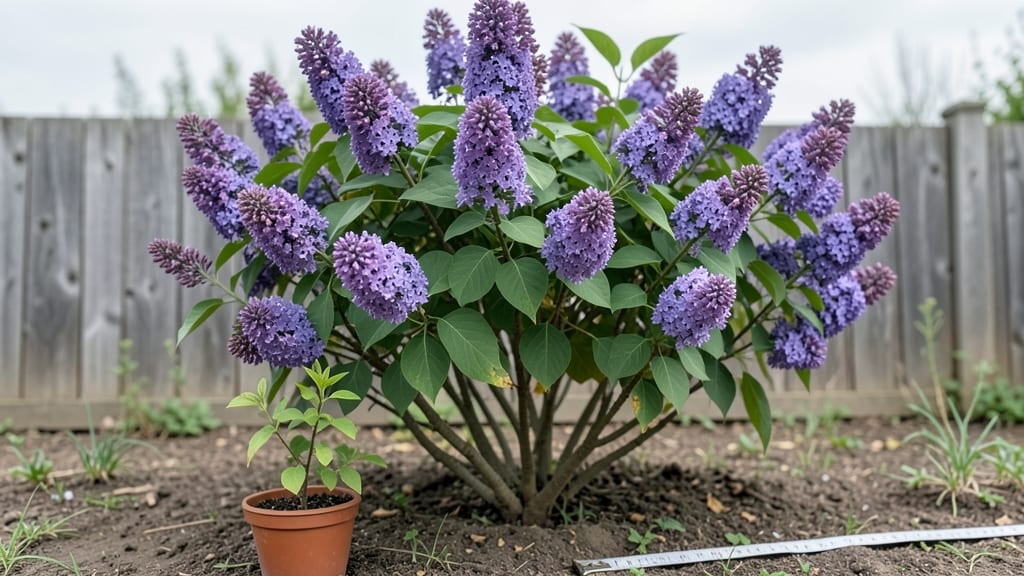
Understanding how fast lilacs grow helps you plan their placement and care. 🌸 The early years are critical—young shrubs can double their height in just 3-5 years if given proper sunlight and well-draining soil.
Dwarf varieties like 'Little Leo' stay compact, making them perfect for small gardens, while larger types need more space to thrive. I’ve seen 'Katherine Havemeyer' grow aggressively in ideal conditions, reaching full bloom size in about 7-10 years.
What many gardeners overlook is how pruning affects growth speed. Over-pruning can slow down a lilac’s expansion, while strategic cuts after flowering encourages bushier, faster growth. The key is balancing size control with the plant’s natural vigor—lilacs reward patience with stunning spring blooms and long-term beauty.
💡 In This Article
- Factors Affecting Lilac Shrub Growth Rates
- Best Lilac Varieties for Fast vs. Slow Growth
Factors affecting lilac shrub growth rates
Lilac shrubs thrive best when planted in full sun (6-8 hours daily), where they can achieve their fastest growth rates. The key mechanism here is photosynthesis—more sunlight means more energy production for the plant.
In my experience, lilacs in partial shade grow about 30-50% slower because their energy production is limited. The root system also plays a crucial role; healthy roots can extend 2-3 feet deep and spread 3-4 feet wide in ideal conditions, creating a strong foundation for rapid above-ground growth.
Soil quality dramatically impacts growth speed. Lilacs prefer well-draining, slightly alkaline soil (pH 6.5-7.5) with a mix of organic matter. Heavy clay soils can stunt growth by 40-60% due to poor oxygen circulation, while sandy soils may require more frequent watering.
I've noticed that adding compost or aged manure at planting time can boost early growth by 20-30% as it improves nutrient availability. The root zone's health directly correlates with how quickly the shrub can push out new stems and leaves each spring.
Watering habits create another critical factor. Lilacs establish deep root systems that make them moderately drought-tolerant once established, but young plants need 1-1.5 inches of water weekly during their first growing season. Overwatering can be just as damaging as underwatering—soggy soil leads to root rot and stunted growth.
I recommend using a soaker hose for deep watering at the base rather than surface sprinkling, which encourages stronger root development and faster overall growth.
Pruning techniques directly influence growth patterns. The best time to prune is right after flowering, when the plant has finished blooming for the season. This timing allows the shrub to redirect energy toward new growth rather than seed production.
Over-pruning—cutting back more than one-third of the plant—can slow growth by 50% or more in the following year. I've found that strategic thinning of old wood (more than 3 years old) actually stimulates faster growth by improving air circulation and light penetration to the center of the shrub.
Climate zones play a surprising role in growth rates. Lilacs are hardy in USDA zones 3-7, but their growth speed varies significantly.
In cooler northern climates (zones 3-4), lilacs often grow more slowly due to shorter growing seasons, while in milder zones (5-7), they can achieve 25-30% faster growth.
The key difference is the number of frost-free days—lilacs need at least 120 days of warm weather to reach their full growth potential each year. In colder regions, growth is concentrated in a shorter window, while warmer climates allow for more extended growing periods.
Seasonal growth patterns reveal another layer of complexity. Lilacs typically grow most rapidly in late spring and early summer, when temperatures are warm but not yet scorching. During this period, you can expect 3-5 inches of new growth per month under ideal conditions.
Fall growth slows dramatically as the plant prepares for dormancy, and winter brings complete growth cessation. Understanding this pattern helps gardeners time their care efforts—fertilizing in early spring and pruning after summer blooms—rather than disrupting the plant's natural cycle.