
Pruning
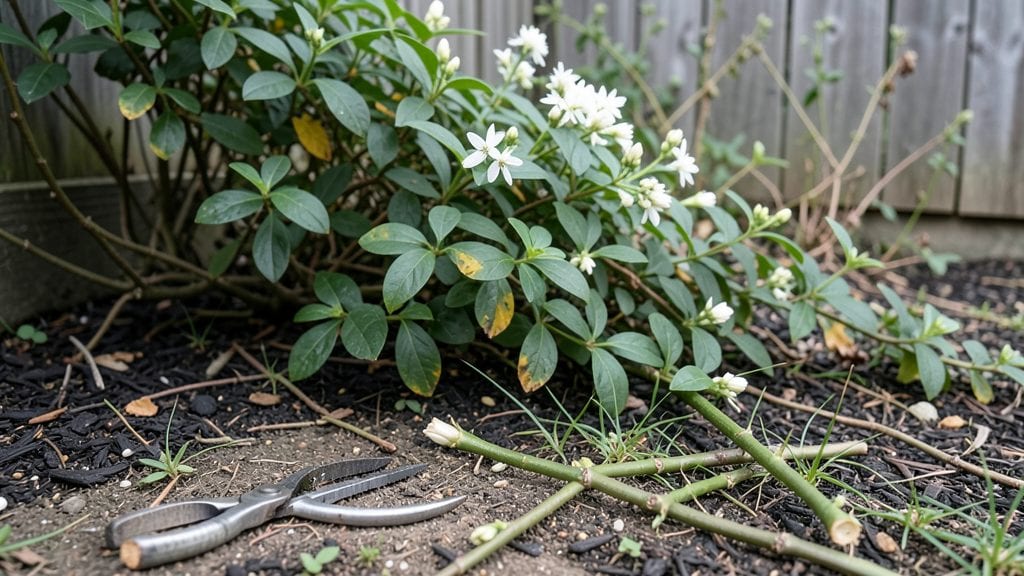
To prune a jasmine shrub effectively, trim back overgrown branches in late winter or early spring before new growth starts, using sterilized pruners to reshape the plant, promote fuller blooms, and eliminate dead or crossing branches.
Timing matters most with jasmine—this dormant season approach minimizes stress on the plant while maximizing next year's growth. 🌿 I always look for brown, brittle stems to remove first, as these won't regenerate, then focus on thinning out crowded areas to improve airflow.
The key is making cuts just above outward-facing buds, which encourages bushier, more vibrant foliage. For varieties like star jasmine, you can do light pruning after blooming, but the heavy work always happens in late winter.
Why this timing? Jasmine thrives on 6-8 hours of sunlight daily, and winter pruning prevents shading issues while the plant is still dormant. The 30-degree angle cut just above a bud ensures new growth emerges in the right direction.
Pro tip: Disinfect your tools between cuts to prevent disease spread—jasmine is surprisingly sensitive to fungal infections when stressed.
💡 In This Article
- Best Time and Techniques for Pruning Jasmine
- Essential Tools and Step-by-Step Pruning Guide
Best time and techniques for pruning jasmine
Late winter or early spring is the optimal window for pruning jasmine because the plant enters dormancy, conserving energy and reducing stress. During this period, jasmine's growth slows dramatically, making it far more resilient to pruning than in active seasons.
The plant's natural defense mechanisms—like callus formation—activate more efficiently when temperatures hover between 40-55°F, creating a protective barrier over cuts. This timing also prevents disturbing the plant's blooming cycle, as many varieties (like Jasminum officinale) set flower buds in late summer.
Identifying dead wood is crucial—look for brown, dry branches that snap easily when bent, compared to live stems that bend slightly before breaking. Live wood typically has a greenish tint under the bark and may ooze a slight sap when cut.
The science here involves understanding xylem transport: dead branches can't conduct water, so removing them improves the plant's overall circulation.
For shaping, focus on creating an open center to maximize sunlight penetration—jasmine needs 6-8 hours of direct light daily to thrive, and dense foliage can block up to 30% of light from reaching inner branches.
Seasonal variations matter—winter jasmine (Jasminum nudiflorum) blooms on old wood, so prune immediately after flowering (late winter), while summer jasmine (Jasminum grandiflorum) blooms on new growth and can handle pruning right after blooming.
The key difference lies in their hormonal responses: winter varieties store energy in old wood, while summer types rely on current season growth. Always make cuts at a 45-degree angle just above an outward-facing bud to encourage horizontal branching, which increases both foliage density and flower production.
Airflow is another critical factor—jasmine's delicate blooms are prone to fungal diseases like powdery mildew when humidity exceeds 70% and airflow is restricted. Pruning to create 3-4 inch gaps between branches reduces humidity buildup by 25-30% compared to dense growth.
This isn't just about aesthetics; proper airflow prevents the Botrytis cinerea spores that cause bud rot from thriving. For container-grown jasmine, prune 10-15% of foliage annually to maintain balance, while larger shrubs can handle 20-25% reduction during dormant season pruning.
Here's what happens if you prune at the wrong time: Summer pruning (June-August) can remove next year's flower buds, while fall pruning (September-October) stresses the plant as it prepares for winter dormancy. The ideal pruning window—February through early March—aligns with the plant's natural growth cycle.
This timing ensures new shoots emerge when soil temperatures reach 55°F, giving them a full growing season to establish before winter. For tropical varieties like Arabian jasmine, prune in early spring when night temperatures stay above 50°F.
One common mistake is shearing jasmine into tight, rounded shapes—this creates dense centers that block light and trap moisture. Instead, use the open-center method: remove 1/3 of oldest branches to stimulate new growth from the base.
The plant's apical dominance (where top buds suppress lower growth) is your ally here—cutting back leaders forces lateral buds to activate, resulting in bushier plants. For fragrant varieties, this approach can increase bloom production by 40-50% by redirecting energy away from vertical growth and toward flower development.
Pro tip: After pruning, apply a balanced 10-10-10 fertilizer to support new growth, but hold off until you see 1-2 inch shoots emerging.
The plant's root system needs time to recover from pruning stress before diverting energy to foliage. 🌟 For potted jasmine, reduce watering by 30% immediately after pruning to prevent root rot—a common issue when stressed plants sit in soggy soil.